
Reset

ACADEMY
Academy 12124Ê1/32 Lockheed...
$ PRICE IN PROGRESS!
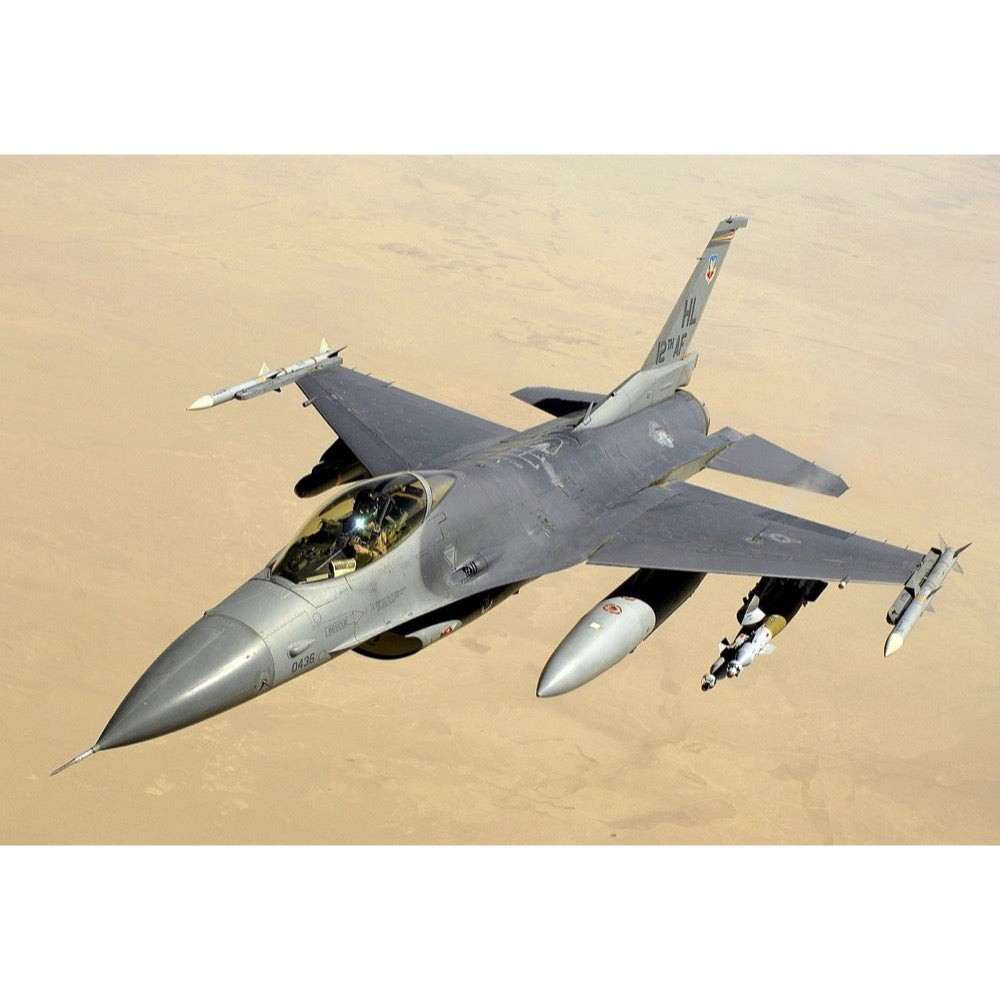
1/32 Lockheed-Martin F-16C Fighting Falcon Air National Guard
This is an injection-plastic aircraft model kit.

ACADEMY
Academy 12126Ê1/35 Bell AH-...
$ PRICE IN PROGRESS!
1/35 Bell AH-1W NTS Update Super Cobra Special
This is an injection-plastic aircraft model kit.


ACADEMY
Academy 12127 1/35 U.S. Mar...
$94.99
$99.99
The AH-1 Cobra helicopter (Bell 209) is an attack helicopter in the classic layout, using many components of its "big brother" UH-1 Huey. The first flight of the AH-1 prototype took place on September 7, 1965 and the helicopter entered mass production in the same year. During the Vietnam War, 1,126 machines of the G model were produced, of which 279 were lost in combat. Due to the very high reliability of the structure, small side profile and good performance, the helicopter remains in service to this day in the US Marine Corps. The AH-1 allowed the US Army to fully implement the theoretical assumption of airmobile infantry ("air cavalry") through the fire support of landing infantry units. Today, the AH-1 Cobra is primarily used against an armored celon. From 1965, several versions of this successful helicopter were created, including: AH-1G (basic version), AH-1J (two-engine version), AH-1Q (version armed with TOW missiles). Technical data: Top speed: 333 km / h; maximum range (depending on version): 507-574km, armament: fixed-1 20mm M197 three-barrel cannon, slung rockets, guided missiles, unguided missiles and cannon pods.
This kit of the USMC AH-1Z Shark Mouth is the newest upgraded variant of the AH-1 attack helicopter used by USMC. With a 20mm rotary cannon, AGM-114, and AIM-9 missiles, as well as two types of rocket pods. The cockpit of this kit is accurately detailed with panel lines and rivets that appear as they do on the real thing. This kit comes with plastic parts to build one model, photo-etched parts and masks for the canopy.
This is an injection-plastic aircraft model kit.
Includes
Plastic sprue parts, decals, photo-etched parts.


ACADEMY
Academy 12129 1/35 AH-64A A...
$60.95
$69.99
The McDonnell-Douglas (Boeing) AH-64 helicopter was selected as the winner in the competition with Bell's YAH-63 in December 1976. The name Apache stuck to the helicopter in 1981. This highly efficient machine has four-blade rotors driven by two General Electric T700-701 turbine engines with a capacity of 1696HP. The vestigial wings are fitted with conventional trailing edge flaps, and a plate tail improves longitudinal steering. The two-man crew takes seats one after the other in the armored cabin. The pilot's seat is in the rear, and the weapon operator / gunner is in the front. The key to the universal use of the helicopter are the TADS systems on the gunner's stand and the PNVS systems used by the pilot. The TADS is a target-tracking laser marker and rangefinder set and a forward-facing infrared sensor that is duplicated by the normal optics. The PNVS system is a developed FLIR system that allows you to pilot a helicopter just above the ground in order to prevent or delay detection by the enemy's anti-aircraft defense. Apache helicopters took part in the operation in Panama in 1989, during the Desert Storm in 1991, or the last conflict in Iraq (2003). At the end of 1990, the construction of a new version of the helicopter began, equipped with a Martin / Westinghouse Longbow millimeter radar installed above the head to control the weapons. It is used to control the Rockwell AGM-114 Hellfire anti-tank missiles. Technical data: Top speed: 300 km / h; climb speed 12.7 m / s, maximum range (without external tanks): 689 km, armament: 30mm Hughes M230A1 Chain Gun fixed-1 cannon, and outboard armaments - most often Hellfire missiles.
The AH-64A Apache is an attack helicopter that has been deployed by the U.S. Army since 1984. This model kit precisely reproduces the M261 rocket pod, the AGM-114 anti-tank missile, the rugged form equipped with a 30mm chain gun, and the front and rear tandem cockpit. Two kinds of decals are included -- the 59th Air Command 1st Battalion, and the 151st Air Regiment, belonging to South Carolina ANG (State Army( dispatched to Iraq.
Features
Highly detailed cockpit with pilot & co-pilot seats
Fully engraved panel lines and embossed rivets
M261 rocket pods, AGM-114 ATGMs and 30mm chain gun included


ACADEMY
Academy 12131 1/35 OH-58D K...
$43.99
The Bell OH-58 Kiowa is a light reconnaissance helicopter of American production from the Cold War and modern times, which is currently (2019) manufactured by Bell Helicopter Textron. The prototype's flight took place in 1962, and the machine entered service in 1969. The helicopter - in the OH-58A version - has a total length of 9.8 meters, and the diameter of its main rotor is 10.8 meters. The drive is provided by a single Allison T-63-A-700 engine with 317 HP. Its maximum speed in horizontal flight reaches approx. 225 km / h. The helicopter has a classic layout with a single main rotor and a propeller on the tail boom.
Work on the Bell OH-58 Kiowa machine began in the early 1960s, when the US Army reported a need for a new, light reconnaissance helicopter. However, the Bell factory lost the fight for this large government contract with Hughes. At the same time, the management of Bell Helicopters plants at that time decided to introduce minor changes to the machine and offer it on the civil market, which actually happened. At the same time, the Hughes plant ran into logistical and financial problems, which significantly slowed down the delivery rate of OH-6 helicopters to the US Army. This fact, exacerbated by the beginning of the Vietnam War, led to the fact that the Bell OH-58 Kiowa helicopter entered service in the American armed forces. Moreover, this machine (known as the Bell OH-58A Kiowa after a few changes) proved to be highly useful on the battlefield. In the course of serial production, several versions of this machine were created, including: OH-58A (the first mass-produced military version), OH-58B (version intended for Austria) or OH-58D Kiowa Warrior (version with extensive field observation systems). fighting in all weather conditions, both day and night). The Bell OH-58 helicopter gained some popularity and in various versions has been or is still operated by countries such as Saudi Arabia, Austria, Greece and Turkey.
This is an injection-plastic aircraft model kit.
ACADEMY
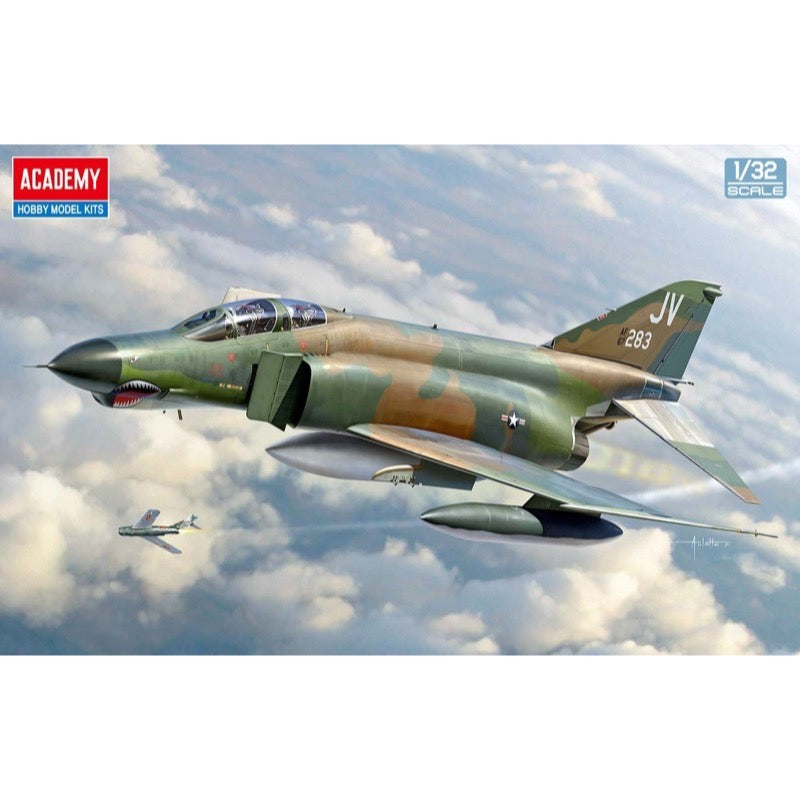
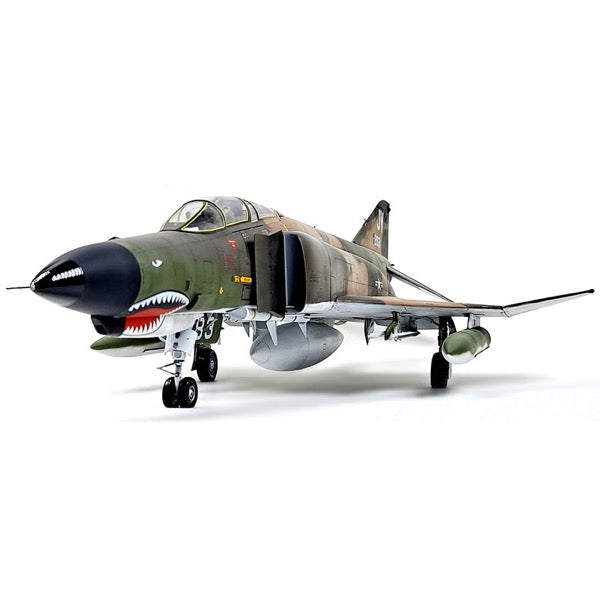
Academy 12133 1/32 USAF F-4...
$147.95
4E Phantom II is here at last! This precisely molded kit expresses each panel line and rivet, with a highly detailed cockpit and landing gear as well. Decals for seven different versions are included, too.
Features
Accurately detailed cockpit and landing gear
Various air-to-air weapons
Some metal parts
Contains seven marking options including USAF, ROKAF, and JASDF
Highly detailed TISEO and various antennas
Includes
7 markings options:
USAF The 388th TFW 469th TFS F-4E "Iceman 03' 67-0283 1972
USAF The 388th TFW 469th TFS F-4E 67-0283 1970's
ROKAF F-4E 67-0283 1970's
USAF The 52nd TFW 480th TFS F-4E 74-1645 1986
USAF The 51st CW(T) F-4E 68-0453 DAEGU AB 1980's
JASDF The 6th Air Wing 303rd SQ F-4EJ 47-8335, mid 1980's
JASDF The 6th Air Wing 303rd SQ F-4EJ 37-8313, mid 1980's
ACADEMY
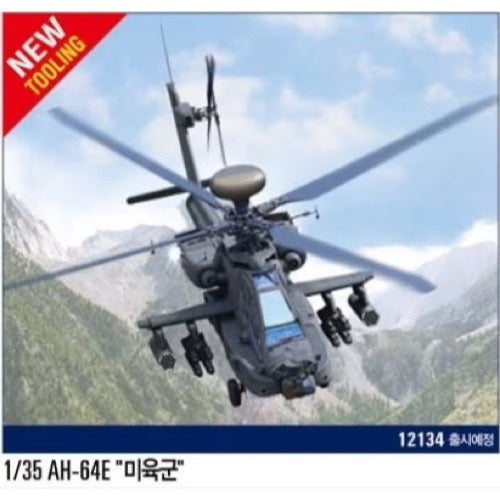
Academy 12134 1/35 Boeing A...
$ PRICE IN PROGRESS!
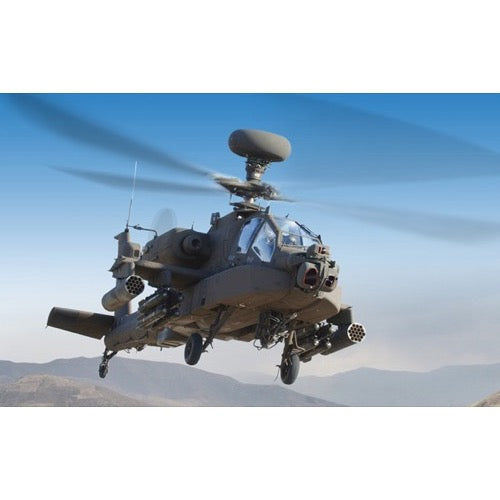
1/35 Boeing AH-64E Guardian/Apache
This is an injection-plastic aircraft model kit.
ACADEMY
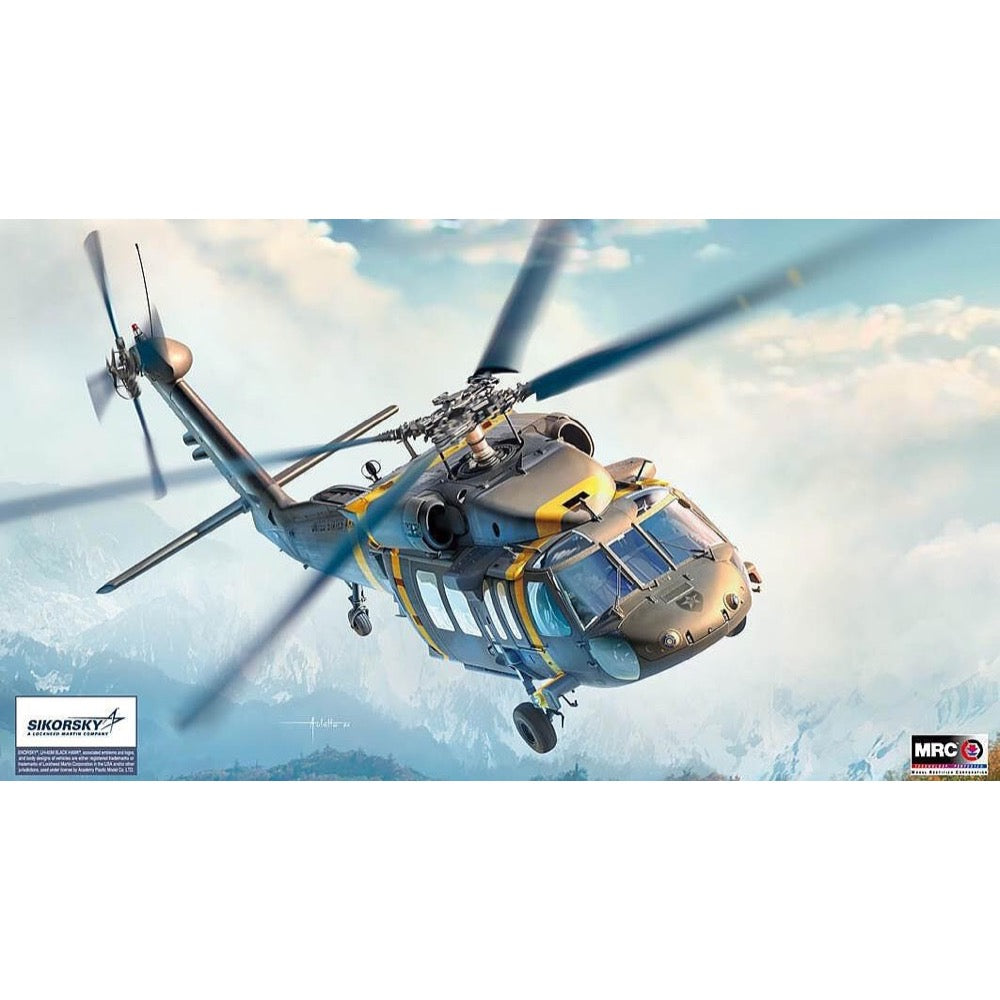
Academy 12135 1/35 Sikorsky...
$84.95
Upgraded variant of the Sikorsky UH-60 Black Hawk utility helicopter used primarily by the U.S. Army and allied forces. Features include more powerful T700-GE-701D engines for improved performance, new rotor blades for increased lift and efficiency, enhanced avionics including a glass cockpit with digital flight control system, improved durability and survivability features. The UH-60M is designed for a variety of missions including troop transport, medevac, combat support, and disaster relief.Updated MRC tooling including new main rotor blade, Radar Warning Receiver (RWR), chaff and flares, M-type engine nozzle device, new cockpit instrument panel.
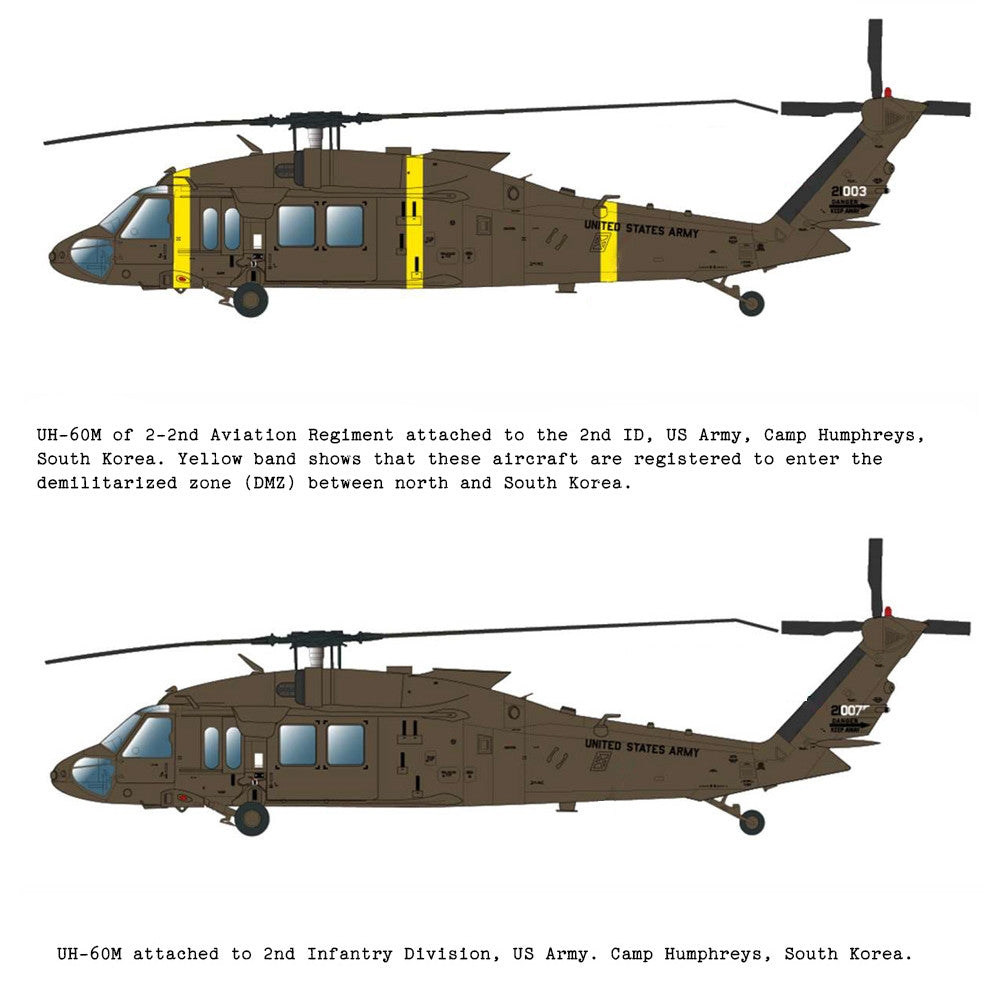
Markings for 5 aircraft: (1) US Army UH-60M of 2–2nd AVN, 2nd ID, Camp Humphreys, South Korea. Yellow band shows aircraft is registered to enter Demilitarized Zone (DMZ) between North and South Korea, with armaments removed; (2) US Army UH-60M of 2–2nd AVN, 2nd ID, Camp Humphreys, South Korea; (3) US Army UH-60M of B Company "Jokers", 3–227th AHB, 1st Cavalry Division, Fort Cavazos, Texas; (4) US Army UH-60M of 3–1 AHB, 1st UD; (5) Australian Army UH-60M, one of 40 aircraft (A60–001–040) arriving since 2023.


ACADEMY
Academy 12138 1/35 USMC UH-...
$79.95
US Marines UH-1Y Venom Utility Helicopter
The Academy 1/35 scale UH-1Y Venom kit replicates the modernised Huey operated by the United States Marine Corps. Equipped with upgraded engines, a four-blade rotor, and advanced avionics, the UH-1Y excels in troop transport, close air support, and medevac roles. This kit captures the versatility and modern features of this key USMC utility helicopter.
The UH-1Y Venom was developed as part of the H-1 upgrade program to replace the ageing UH-1N Hueys. Entering service in the late 2000s, the Venom shares over 80% of its components with the AH-1Z Viper, reducing logistical challenges while improving combat readiness. With its advanced avionics, enhanced survivability, and greater lift capacity, the UH-1Y has been widely used in Iraq, Afghanistan, and beyond, demonstrating reliability in both combat and humanitarian missions. As the modern incarnation of the legendary Huey, the Venom continues to serve as a critical asset to the United States Marine Corps.
Features
A highly modernized version of the legendary UH-1 "Huey," featuring a new four-bladed composite rotor system for enhanced performance and durability.
Shares a high degree of parts commonality (85%) with the AH-1Z Viper, simplifying maintenance and reducing logistical costs for the Marine Corps.
Equipped with a modern "glass" cockpit and advanced avionics, providing pilots with superior situational awareness.
A versatile multi-role platform, capable of performing a wide range of missions, including troop transport, medical evacuation, and fire support.
Contents
Plastic parts for assembling the USMC UH-1Y Venom
Instruction sheet
Paint layout sheet
Five distinct decal schemes


ACADEMY
Academy 12208 1/48 P-38F Li...
$39.95
The Lockheed P-38 Lightning is an American, twin-engine, multi-role, long-range fighter with a double-bar structure with a three-wheeled undercarriage and a full metal structure. One of the most important American fighters of World War II. Technical data: length: 11.53 m, wingspan: 15.85 m, height: 3.91 m, maximum speed: 712 km / h, climb speed: 24.1 m / s, maximum range: 2,100 km, practical ceiling: 13,000 m, armament: Fixed - 4 M2 12.7mm machine guns, 1 20mm Hispano cannon, sling - up to 1800 kg payload.
Limited reissue of the Academy 1/48 scale P-38F kit with decals to mark it as a "Glacier Girl", the restored aircraft recovered from deep inside a glacier in Greenland. The recovery of this historic aircraft is one of the great feats of engineering of the late 20th century. Markings are also included for "Oriole", the aircraft flown by Captain Murray J. Shubin of the 339th FS, 347th FG in WW2. See box photo or art for marking details.
This is an injection-plastic aircraft model kit.
ACADEMY
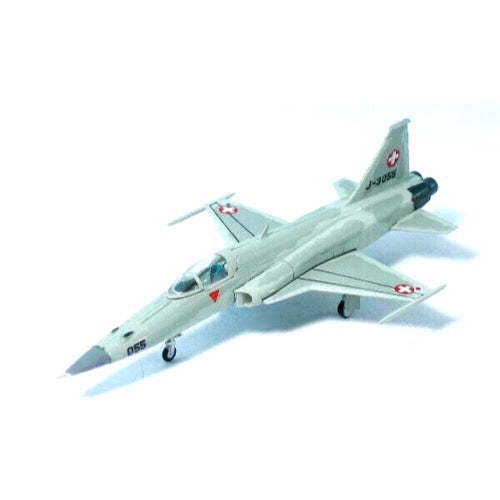
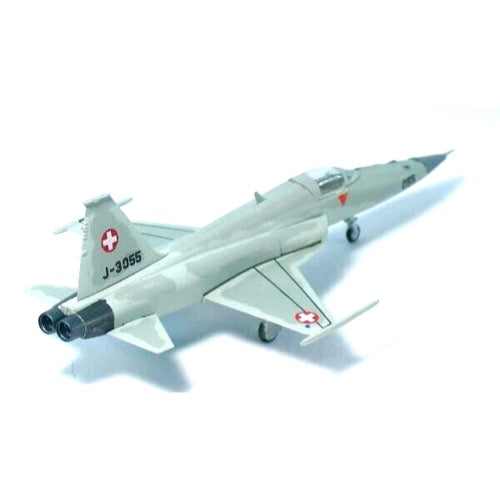
Academy 12214 1/48 Northrop...
$ PRICE IN PROGRESS!
1/48 Northrop F-5E Tiger II
This is an injection-plastic aircraft model kit.


ACADEMY
Academy 12217 1/48 F-15I RA'AM
$67.95
The McDonnell Douglas F-15 Eagle is an American twin-engine fighter and attack aircraft, the first flight of which took place on July 27, 1972. The F-15 aircraft is the result of the experience gained from air combat over Vietnam, and is also the USAAF's response to the Soviet Mig-23 and Mig-25 fighters. It was created as part of the FX (Fighter Experimental) project, in which the winner was McDonnell-Douglas in 1969. When designing the F-15, particular emphasis was placed on the maximum reduction of service time. Mainly, on the one hand, it was based on the installation of elements that were as easy to use as possible, and on the other hand, the use of automatic systems, which kind of relieve people. As a result, the successor of the F-4 Phantom, surpassing it in all respects, can be served in half the time. Another strength of the F-15 is the pair of Pratt-Whitney F100 afterburner engines, which produce 4,500 kg more thrust than the machine itself weighs, allowing it to make tight turns without sacrificing great speed. In addition, it makes it possible to suspend a huge amount of additional weapons on 8 knots under the wings and fuselage.
From the moment the F-15 entered service, several variants were created. The C and D versions are the second generation of single and double seater aircraft, respectively, replacing the A and B versions in 1979. Externally, they do not differ much from them, but the avionics underwent a comprehensive modification, which made the Eagle even more lethal weapon. In the 1980s, the F-15D also experimented with ASAT anti-satellite missiles. A version of the F15-E Strike Eagle was being developed at the same time.
Contrary to the previous models, the E version is not only a hunting machine used for air superiority, but also an assault machine with a wide range of possibilities for attacks on ground targets. The E version entered service in 1988 and is expected to remain in the line until 2035. Another variant is the F-15J, exported and produced under license in Japan. F-15 aircraft were exported to several countries, including Japan, Israel, Saudi Arabia and South Korea. The F-15 turned out to be a very valuable machine, achieving air victories, among others. during Operation Desert Storm and the 2003 invasion of Iraq.


ACADEMY
Academy 12220 1/48 F-111C R...
$78.95
The General Dynamics F-111 Aardvark was an American multi-role variable wing geometry jet aircraft from the Cold War and modern times. The flight of the aircraft took place in 1964 and its production began in 1967. In total, about 560 aircraft of this type were built. In the F-111 F version, the drive was provided by two Pratt and Whitney TF-30-P-100 engines, each with a thrust of 112 kN with afterburning. The aircraft's on-board armament consisted of a single 20mm M61A1 Vulcan cannon. The machine could also carry a load of bombs and rockets with a total weight of up to 14,300 kilograms.
Work on General Dynamics F-111 Aardvark started in the early 1960s and established a joint fighter and fighter-bomber machine for the air force and the navy. It was assumed that ultimately the F-111 would replace or complete the F-8 and F-4 planes in the line. At the time of its introduction to the F-111 line, it began to be perceived as a machine that was not very successful and was troubled by technical problems. What's more, it is expensive to buy and operate. Over time, however, along with the adaptation of the F-111 to new tasks, it turned out to be a machine with at least satisfactory parameters. Several versions of this aircraft were created, including: F-111A (basic version), F-111B (version dedicated to the US Navy, but not entered into production), F-111C (version intended for Australia), F-111D ( a highly modernized version A with new engines and electronics) or the F-111F (version with an extended and modernized avionics). Australia was the main and only foreign user of the F-111 aircraft.
This special release of Academy's fine F-111 kits includes a poster, Cartograf decals for four Australian Air Force aircraft, plus a brass pitot tube.
This is an injection-plastic aircraft model kit.


ACADEMY
Academy 12227 1/48 MIG-29AS...
$58.95
$69.99
Mikojan-Guriewicz MiG-29 (NATO: Fulcrum) is a Soviet, twin-engine, 4th generation heavy front-line fighter with trapezoidal, strip wings. The mere number of over 1000 MiG 29s produced between 1977 and 1992 proves the potential capabilities of this aircraft. In fact, it must be included in the group of 3 or 4 most important, currently in active service, 4th generation fighters in the world. The MiG-29 was designed in the 1970s as a construction that could match or even exceed the combat capabilities of fighters from the then hostile western camp. Technical data: length: 17.37 m, wingspan: 11.4 m, height: 4.73 m, maximum speed: 2400 km / h, speed of climb: 330 m / s, maximum range: 2100 km, maximum ceiling 18000 m, armament: fixed-1 30mm GSh-301 cannon, suspended (M version) - up to 5000 kg of cargo.
Limited reissue of the Academy 1/48 MiG-29 kit with markings for a Fulcrum of the Slovak Air Force in "digital" camouflage. Sections of the camo are represented by decals, so spare yourself the agony of using yards of carefully-cut Tamiya tape by building this kit!
This is an injection-plastic aircraft model kit.


ACADEMY
Academy 12232 1/48 F-4B "VF...
$95.95
$109.99
Entering service with the US Military in 1960, the F-4 Phantom II began as a fleet defense fighter for the USN. In 1963, the aircraft was adopted as the USAF’s lead fighter. It was a Cold War icon that broke fifteen world records and held onto five of them until 1975. The aircraft was produced from 1960-1981, with 5,195 built and operating in eleven other countries. This 1/48 scale model from Academy depicts the McDonnell Douglas F-4B, number 200 as it appeared with the “Sundowners” in the 1970s. The VF-111 “Sundowners” acquired their F-4B aircraft in 1971, and that fall, they were deployed to the Gulf of Tonkin on the USS Coral Sea for 148 days. The USAF acquired twenty-nine aircraft on loan before making the Phantom II their primary fighter, and the aircraft tails and fuselage were given USAF numbers. The fully assembled 1/48 scale model is 35.5cm long and is 10.4cm tall.
Features
Highly detailed:
Interior and cockpit
Positionable canopies, speed brakes, rudder, and air refueling probe
Landing gear and compartment
Molded and folded outer wing panels
Afterburner chambers with/ turbine faces
Includes
Plastic and transparent parts
14 sprues with more than 460 multi-color parts
Three crew figures
Optional boarding ladder
Decal sheets
Air-to-air and air-to-ground weapons include:
AIM-9B Sidewinder (x 4)
AIM-7D/E Sparrow (x4)
Mk.82 Slicks (x12)
370-gallon wing tank (x2)
600-gallon centerline tank
Triple ejector racks (TER) (x2)
Multiple ejector rack (MER) (x2)
Detailed manual


ACADEMY
Academy 12234 1/48 F-86F Th...
$54.95
The North American F-86 Saber is an American single-seat turbojet fighter aircraft that was considered a worthy opponent of the Mig 15 during the Korean War. The flight of the F-86 prototype, which was powered by the Chevrolet J35-C-3 engine, took place in October 1947. The plane entered the line in 1949. The F-86 was the first mass-produced fighter capable of exceeding the speed of sound. The North American F-86 Saber was the U.S. primary fighter during the Korean War that was able to compete and successfully fight the Mig-15. It is estimated that the ratio of combat losses of both these machines is 2: 1 in favor of the American machine. The F-86 also took part in other conflicts: in the Indo-Pakistani war in 1965 and in the Bangladeshi War of Independence in 1971. A dozen or so versions of the F-86 were created, which differed from each other in the built-up engine, weapons and tasks performed. Three versions are the most popular. F-86A, the first serial version, fulfilling the role of a fighter, 554 copies were produced. Another is the F-86D, with a new General Electric J47-GE-17 engine, a characteristically elongated bow part and a new horizontal tail. In total, 2504 units of this version were created. Finally, the F-86F version, with the new General Electric J47-GE-27 engine and reinforced wings. 2239 units of this version were produced. The F-86 was also produced under the license of min. in Australia and Canada. In total, 9,812 pieces of this successful aircraft were built. Technical data (F-86F version): Maximum speed: 1,106 km / h, climb speed: 45.7 m / s, maximum altitude 15,100 m, maximum range: 2,454 km, armament: fixed - 6 M2 Browning 12 machine guns 7mm sling - up to 2400 kg of bombs and rockets.
The F-86F Saber was the flagship fighter aircraft used by the U.S. Air Force in the 1950s and 1960s. This model kit from Academy features a high level of detail including precision-molded panel lines, and a set of decals is included to mark it as the personal aircraft of Jim Thompson from the U.S. Air Force 39th Combat Interceptor Squadron.
This is an injection-plastic aircraft model kit.


ACADEMY
Academy 12235 1/48 Tomahawk...
$ PRICE IN PROGRESS!
The Curtiss P-40 Warhawk is an American, single-engine, metal-framed, low-wing fighter-attack aircraft with a classic tail. The prototype first flew in 1938, and serial production took place in 1938-1944. The last of the Hawk family, the Curtiss P-40 Warhawk, was, apart from the Republic P-47 and North American P-51 Mustang, the most widely built American fighter. By the time production ended in December 1944, the number of aircraft had exceeded 15,000. The development of the design began in 1937, when the prototype airframe of version 75 was adapted to accommodate the Allison V-1710-11 inline engine with a power of 1,167 HP. The aircraft became the first American design capable of flying at a speed of over 483 km/h. The version for the RAF was called the Tomahawk Mk IIA. The aircraft had self-sealing fuel tanks and two 7.7mm machine guns mounted in the wing. The Tomahawk MkIIB had American radio equipment and were armed with six 7.7mm machine guns. Some American P-40s were modernized in 1941 for reconnaissance duties. They received the designation RP-40. At the same time, work was underway at Curtiss on the conversion of the Hawk 81-A. The changes included the installation of an Allison V-1710-39 engine with 1,167 hp, providing constant power to an altitude of 3,563 meters, adaptation to the installation of four 12.7mm machine guns in the wing and the installation of an under-fuselage unit that could be used to carry one 227 kg bomb or a jettisonable additional fuel tank. The US Army placed an order for these aircraft in September 1940, assigning them the designation P-40D. Over the next three years, Curtiss made every effort to expand the P-40's capabilities, creating numerous new versions of the aircraft. Despite these efforts, the Warhawk's performance was lower than that of contemporary Allied and Axis fighters. Technical data (P-40E version): length: 9.66 m, wingspan: 11.38 m, height: 3.76 m, maximum speed: 580 km/h, rate of climb: 11 m/s, maximum range: 1100 km, practical ceiling: 8800 m, armament: fixed - 6 M2 machine guns, caliber 12.7 mm, underslung - up to 900 kg of payload.
Limited reissue of the Academy 1/48 scale Tomahawk IIb kit with markings for four RAF aircraft used in North Africa: one flown by Pilot Officer Jack Bartle of 112 Sqdn., one flown by Flight Lieutenant Clive Caldwell and two flown by Pilot Officer Neville Duke.
This is an injection-plastic aircraft model kit.


ACADEMY
Academy 12247 1/48 Mirage I...
$21.95
The Dassault Mirage III (French pronunciation: [miʁaʒ]) is a family of single/dual-seat, single-engine, fighter aircraft developed and manufactured by French aircraft company Dassault Aviation. It was the first Western European combat aircraft to exceed Mach 2 in horizontal flight, which it achieved on 24 October 1958.
In 1952, the French government issued its specification, calling for a lightweight, all-weather interceptor. Amongst the respondents were Dassault with their design, initially known as the Mirage I. Following favourable flight testing held over the course of 1954, in which speeds of up to Mach 1.6 were attained, it was decided that a larger follow-on aircraft would be required to bear the necessary equipment and payloads. An enlarged Mirage II proposal was considered, as well as MD 610 Cavalier (3 versions), but was discarded in favour of a further-developed design, powered by the newly developed Snecma Atar afterburning turbojet engine, designated as the Mirage III. In October 1960, the first major production model, designated as the Mirage IIIC, performed its maiden flight. Initial operational deliveries of this model commenced in July 1961; a total of 95 Mirage IIICs were obtained by the French Air Force (Armée de l'Air, AdA). The Mirage IIIC was rapidly followed by numerous other variants.
This is an injection-plastic aircraft model kit.


ACADEMY
Academy 12248 1/48 Mirage I...
$19.95
The Dassault Mirage III / 5/50 is a French single-engine fighter-attack aircraft with a delta-shaped lobe, without horizontal tail. In late 1955, Dassault began building a single prototype that retained the delta wing and an enlarged fuselage that could accommodate one SNECMA Atar 101G1 engine. The resulting Mirage III-001 was flown on November 17, 1956, to reach a flight speed of 1.52Ma after just two months. Technical data (version IIIC): length: 14.77m, wingspan: 8.22m, height: 4.25m, maximum speed: 2.2Ma, climb speed: 83m / s, maximum range (with additional tanks): 4000km, maximum ceiling 17000m, equipment: fixed - two 30mm DEFA 552 cannons, suspended (Mirage 5) - up to 4200 kg of cargo.
Features
Fully engraved panel lines and rivet details
Highly detailed cockpit interior and landing gear
Authentic French Air Force Marking included
1:48 scale plastic model kit from Academy, requires paint and glue.


ACADEMY
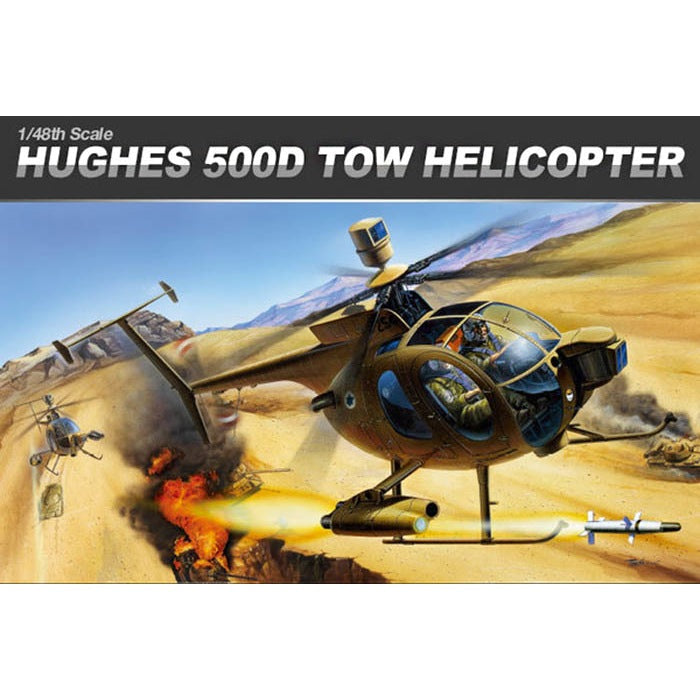
Academy 12249 1/48 Hughes 5...
$17.95
The Hughes 500D Police helicopter went into production in 1969 and is one of the fastest helicopters in its class. The MD 500 series is an American family of light utility civilian and military helicopters. It developed from the Hughes 500, a civilian version of the US Army's OH-6A Cayuse/Loach. This kit includes fully engraved panel lines, highly detailed cockpit interior, police figure, motorcycle, as well as a marking and painting guide. Decals are included to further enhance the accuracy and realism of this kit.
This is an injection-plastic aircraft model kit.
ACADEMY
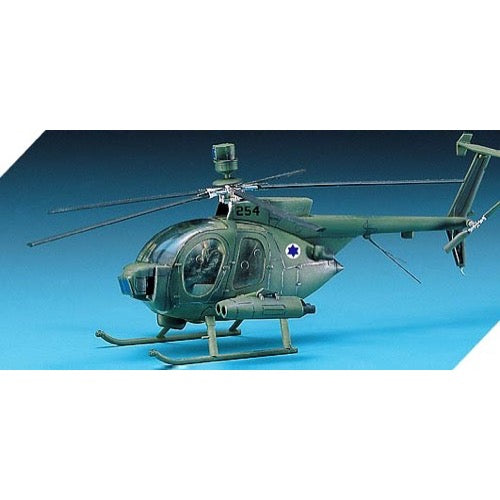
Academy 12250 1/48 Hughes 5...
$18.95
The McDonnell Douglas Helicopter Systems MD 500 Defender is a light multi-role military helicopter based on the MD 500 light utility helicopter and OH-6 Cayuse Light Observation Helicopter.
The original OH-6 Cayuse helicopter proved its worth during the Vietnam War in the light helicopter role. The designers at Hughes realized there was a market for a light multi-mission helicopter with an improved equipment fit than the OH-6 and Model 500M. The resulting design was the Model 500MD Defender which first flew in 1976. It was tailored for specific roles including unarmed observation and an armed scout helicopter equipped with TOW anti-tank missiles. An anti-submarine version was developed with a search radar, magnetic anomaly detector and the capability to carry lightweight aerial torpedoes.
Academy brings us a highly detailed model kit of the Hughes 500D TOW helicopter!
This is an injection-plastic aircraft model kit.
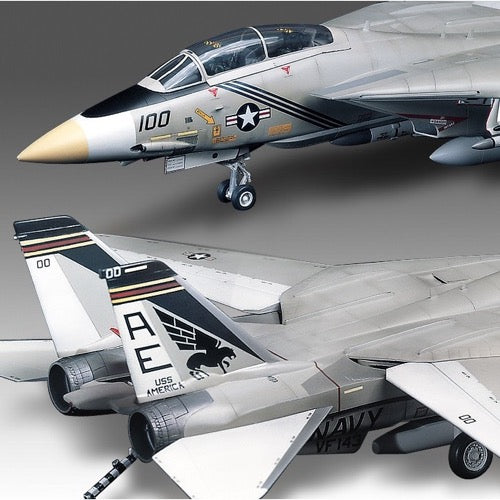
ACADEMY
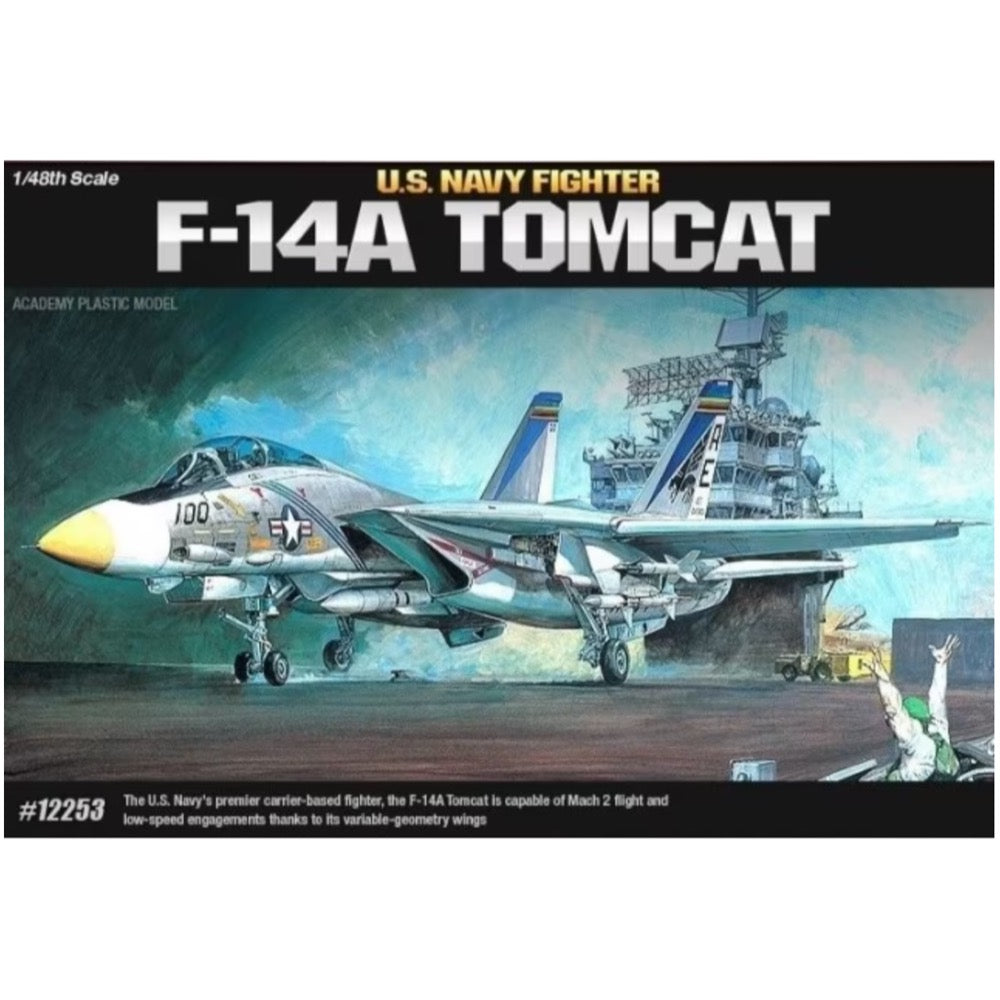
Academy 12253 1/48 F-14A To...
$57.95
$69.99
Designed as the U.S. Navy's primary fighter, the F-14 Tomcat could perform air superiority, escort, and strike missions and was undoubtedly one of the most sophisticated and technologically advanced aircraft ever to serve an aircraft carrier. The prototype machine was flown on December 21, 1970, and the first planes were delivered to the US Navy four years later. The last Tomcat planes were decommissioned only in 2006, which perfectly illustrates the high quality and great performance of this machine. The most innovative and characteristic solution for the F-14 are the wings with variable geometry. Controlled by computer or manually by the pilot, they can change their angle of attack from 20 degrees at minimum speed to 60 degrees at supersonic speeds. The changing geometry of the wings also allows for optimal positioning of the wings when maneuvering tightly, thanks to which this powerful aircraft exhibits amazing maneuverability. The heart of the Tomcat weapon system is the Hughes ANG-9 radar, usually cooperating with the AIM-54A Phoenix air-to-air missiles with a range of up to 180 km. Being able to track and attack more than one target is especially important. No less important element of the armament, as shown by the combat experience in the Vietnam War, is the cannon - in the F-14 mounted inside the M-61 Vulcan hull, firing up to 6,000 rounds per minute! Of course, you can also attach other types of weapons to the Tomcat, such as Sparrow, Sidewinder rockets or various bombs. The F-14 also owes a lot of its success to the excellent power unit in the form of a pair of Pratt-Whitney TF30 engines with a thrust of 9300 daN with afterburning. Technical data: Maximum speed: 2480 km / h, climb speed: 153 m / s, practical ceiling 17100 m, maximum range: 3200 km, armament: fixed - single, six-barrel 20mm M61-A1 cannon, suspended - up to 6580 kg cargo.
Features
Detailed cockpit
Full weapons load of AIM-7, AIM-9
AIM-54 and TARPS pod, swinging wings
Pilot figures and optional position airbrake.
Open and closed styles of afterburner cans are also included.


ACADEMY
Academy 12259 1/48 F-16A/C ...
$38.95
This Academy 12259 F-16A/C Fighting Falcon 1/48 model kit is a great way to experience the remarkable design and power of the iconic American multirole jet fighter. A superb dogfighter, the F-16 has been a success on the export market and has been produced for over 4,000 customers since 1976. This model kit features the classic F-16 bubble canopy, side-mounted control stick, and reclined pilot seat. Now you can enjoy the F-16's unmatched versatility and performance in model form.


ACADEMY
Academy 12262 1/48 AH-64A A...
$30.95
The McDonnell-Douglas (Boeing) AH-64 helicopter was selected as the winner in the competition with Bell's YAH-63 in December 1976. The name Apache stuck to the helicopter in 1981. This highly efficient machine has four-blade rotors driven by two General Electric T700-701 turbine engines with a capacity of 1696HP. The vestigial wings are fitted with conventional trailing edge flaps, and a plate tail improves longitudinal steering. The two-man crew takes seats one after the other in the armored cabin. The pilot's seat is in the rear, and the weapon operator / gunner is in the front. The key to the universal use of the helicopter are the TADS systems on the gunner's stand and the PNVS systems used by the pilot. The TADS is a target-tracking laser marker and rangefinder set and a forward-facing infrared sensor that is duplicated by the normal optics. The PNVS system is a developed FLIR system that allows you to pilot a helicopter just above the ground in order to prevent or delay detection by the enemy's anti-aircraft defense. Apache helicopters took part in the operation in Panama in 1989, during the Desert Storm in 1991, or the last conflict in Iraq (2003). At the end of 1990, the construction of a new version of the helicopter began, equipped with a Martin / Westinghouse Longbow millimeter radar installed above the head to control the weapons. It is used to control the Rockwell AGM-114 Hellfire anti-tank missiles. Technical data: Top speed: 300 km / h; climb speed 12.7 m / s, maximum range (without external tanks): 689 km, armament: 30mm Hughes M230A1 Chain Gun fixed-1 cannon, and outboard armaments - most often Hellfire missiles.
This is an injection-plastic aircraft model kit.