
Reset

ACADEMY
Academy 13516 1/35 German P...
$79.99
$84.99
PzKpfw IV (Panzerkampfwagen IV) was a German medium tank from the Second World War. The first prototypes of the vehicle were created in 1936, and serial production continued in the period 1938-1945, ending with the production of about 8,600 vehicles. The D version of the tank was powered by a single Maybach HL 120 TRM engine with a capacity of 300 HP. It was armed with 1 75mm KwK 37 L / 24 gun and 2 7.92mm MG 34 machine guns.
The PzKpfw IV was created as a result of a competition announced at the end of 1934 by the German Armaments Department for a medium tank weighing up to 18 tons and armed with a 75 mm gun. The competition was won by the Krupp company, whose vehicle was put into mass production - as it turned out, it was a vehicle that can be safely called the "workhorse" of German armored forces during World War II and one of the most intensively developed and modernized Wehrmacht tanks. Numerous variants of the PzKpfw IV were created in the course of production. Chronologically, the first was the A version, armed with a 75mm short-barreled gun and a 230hp engine. However, versions B and C appeared quickly, in which several significant changes were made: first of all, more powerful engines (265 HP in version B and Maybach HL 120 TRM with 300 HP in C version - which were installed in PzKpfw IV until 1945 year), and the armor of the entire car was improved. The F1 and F2 versions turned out to be a real revolution, in which the frontal armor was increased to 60 mm, and the main armament was changed to the great, long-barreled 75mm KwK 40 L / 43 cannon, which in 1942 and 1943 allowed them to fight any Allied or soviet. The most frequently produced versions of the PzKpfw IV were the G, H and J versions, which were very similar to the F1 and F2 versions. The main armament has not changed significantly (it was still the KwK 40 cannon), as well as the engine and chassis. On the other hand, the armor was slightly strengthened, and from the beginning of 1943 armored screens (Schurzen) were installed on them. Numerous other vehicles were built on the chassis of the PzKpfw IV, such as the StuG IV assault gun, the Nashorn tank destroyer or the Wirbelwind self-propelled anti-aircraft gun. PzKpfw IV tanks were used on almost all fronts of World War II - from the September campaign in 1939, through the campaign in France in 1940, the Barbarossa and Typhoon operations in 1941, the Battle of Kursk in 1943, to the last operations of the German army against The USSR and the Western Allies in 1944-1945.
This kit from Academy of the Pz.Kpfw.IV Ausf. H has a modest number of parts to reproduce this masterpiece medium German tank. Decals for two versions and Zimmerit coating are included, and the tracks are belt-type for ease of assembly.
This is an injection-plastic military vehicle model kit.
Includes
Decals for 2 versions and Zimmerit coating
Size
Approximately 20cm long, 7.6cm high when completed
ACADEMY
Academy 13519 1/35 Finnish ...
$59.99
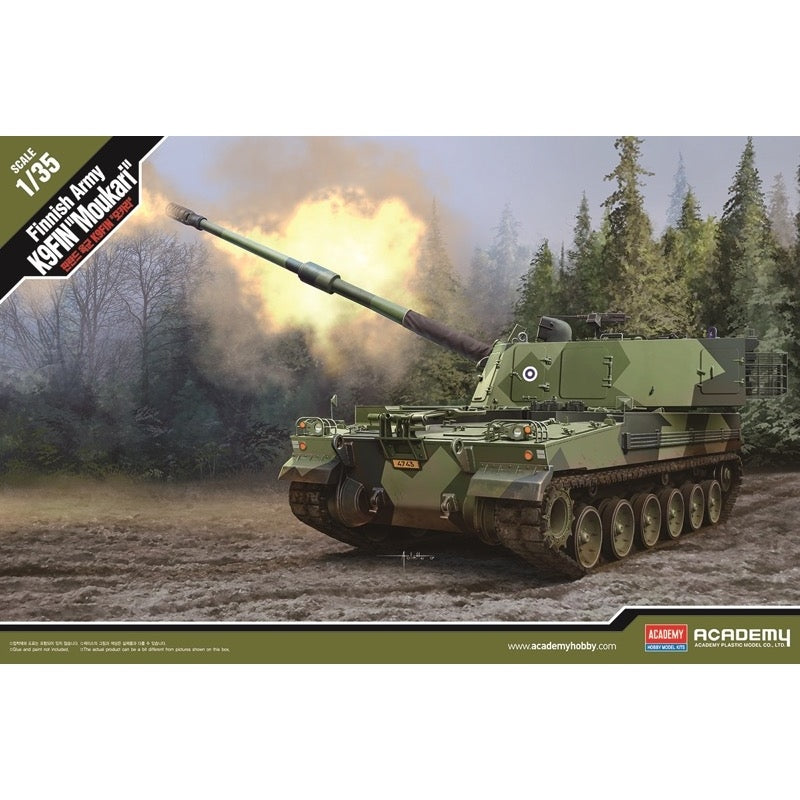
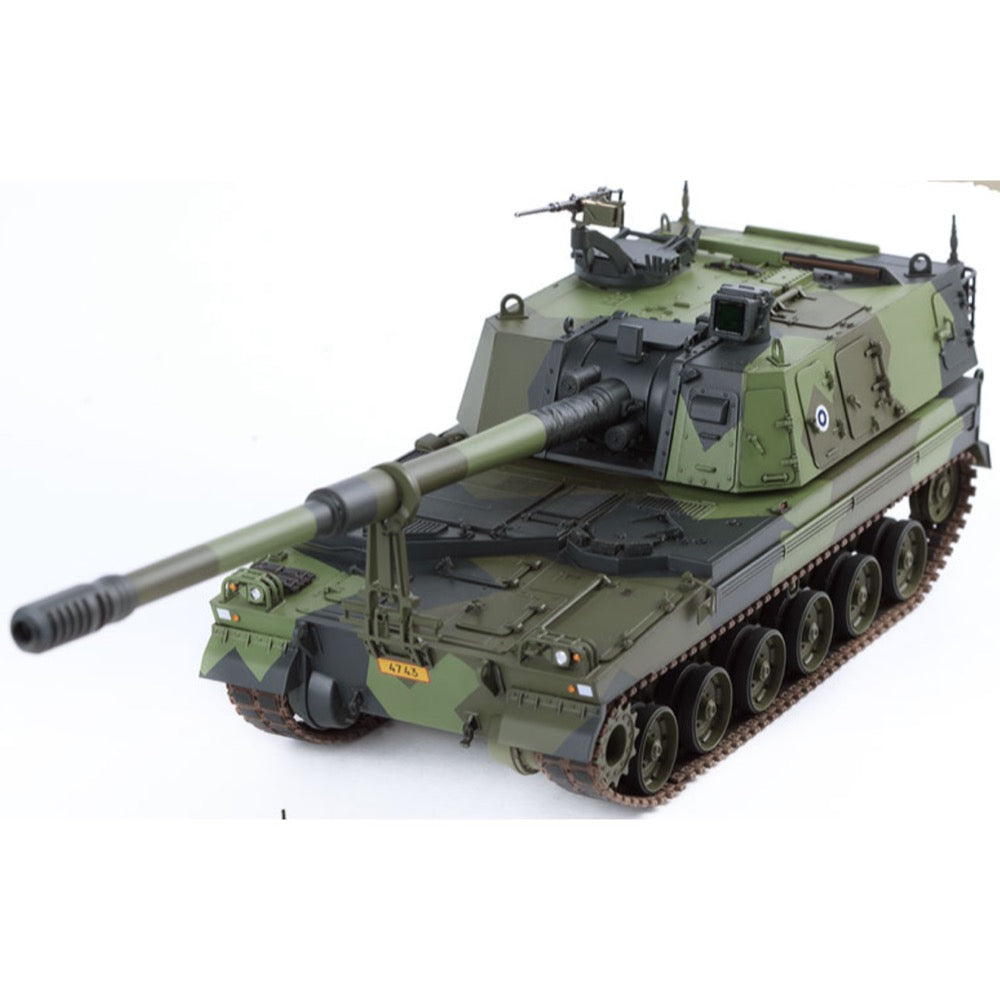
The K9 Moukari is a modern Finnish self-propelled howitzer of Korean production. The first cars of this type entered the line in the Finnish army in 2017. The total length of the vehicle is 12 meters with a width of 3.4 meters. The drive is provided by a single motor MTU MT-881 Ka-500 with a maximum power of up to 1000 KM. The maximum speed on the road is 67 km / h. The armament consists of a single 155 mm howitzer and a single 12.7 mm machine gun. The Finnish armed forces became interested in the purchase of new self-propelled howitzers in 2014-2015, and already in 2016 talks were started to obtain used South Korean K9 Thunder howitzers. At the beginning of 2017, a contract was signed, as a result of which 48 vehicles of this type will be purchased by the Finnish side, and the first vehicles will be added to the line in the same year! Self-propelled howitzers are assumed The K9 Moukari will be replaced in service by the SpH 74 vehicles, which are essentially modernized 2S1 Goździk vehicles. It is worth noting that the K9 Moukari did not undergo thorough modernization before entering service in the Finnish armed forces, but it is likely that they will be implemented over time and will consist in improving the mobility of the K9 Moukari in high snow and increasing its range.
Academy brings us their 1/35 K9FIN Moukari scale model kit! This kit features the Finnish Army's self-propelled howitzer acquired from South Korea. It has a 155mm main gun that can be built in a stowed or deployed position. Flexible rubber tracks are included and a decal sheet featuring engraved Finnish Army markings is also included.
This is an injection-plastic military vehicle model kit.
Includes
5 figures


ACADEMY
Academy 13521 1/35 USSR M10...
$74.99
$79.99
The M10 Wolverine (called Wolverine) is an American tank destroyer from the Second World War. A tank destroyer, a vehicle with high mobility and firepower, was urgently needed in the early 1940s. Efforts were made to speed up the work on the project as much as possible, but it was not accepted until September 1942. The result was a vehicle based on the M4A2 body, slightly flattened at the top, with an unusual semi-open turret. Such a solution, along with minimizing the armor, was supposed to reduce the weight, and thus increase the mobility of the new tank destroyer. The drive was served by 2 coupled 6-cylinder General Motors 6046 engine with a power of 375HP. The M10s were primarily intended for the European theater of operations as a remedy for German armored vehicles. They fought in the Normandy campaign in France and later in Germany in 1945. They also performed well in the fighting in the Apennine Peninsula. They were used by the 1st Armored Division and the 2nd Polish Corps. The M 10 Wolverine was based primarily on its mobility and speed, it had weak armor which made it a rather offensive weapon. Nevertheless, in the hands of a well-trained crew, he could be a formidable opponent. Technical data: length (without barrel): 5.97m, width: 3.05m, height: 2.9m, weight 29.6t, engine power: 375KM, speed (on the road): 50 km / h, armament: 1 cannon H-7 76.2mm and 1 MG Browning HB M2 12.7mm.
Academy's model kit of the USSR M10 tank destroyer "lend-lease" comes with five tank crew figures to bring it to life! It also features accurately reproduced 3-inch main gun, .50 caliber machine gun, crew compartments, and other fine details. Photo etch parts are included.
This is an injection-plastic military vehicle model kit.
Includes
5 figures


ACADEMY
Academy 13522 1/35 German S...
$70.95
1/35 scale plastic model kit of the StuG IV Sd.Kfz.167 WWII German Army assault gun.
This is an injection-plastic military vehicle model kit.
Features
75mm Stuk L/48 gun and MG34 machine gun
Build with hatches open or closed
Contains four marking options
Flexible rubber tracks
Size
Approximately 19.8cm long, 7cm high when completed


ACADEMY
Academy 13523 1/35 German P...
$74.95
The Pz.Kpfw V (SD.Kfz 171) Panther is a German medium tank, considered to be one of the best tanks of the Second World War. This vehicle was a response to the Soviet T-34. The first production versions appeared as early as 1942, but the Panthers appeared for the first time on the front lines in the summer of 1943, in the Battle of Kursk. Due to the very high failure rate and numerous "childhood" problems of the vehicle, 150 out of 204 used vehicles were lost. Interestingly, however, only a few of these 150 cars were lost as a result of the Soviet shelling. After eliminating these shortcomings, the Panther became famous as an extremely effective tank. It owed it to the well-shaped frontal armor and the excellent anti-tank gun. KwK 42 / L70 cal 75mm. The basic version of the T34 / 76 did not stand a chance with the Panther. Only the advent of the T34 / 85 and IS-2 tanks changed this state of affairs. On the other hand, the Allied Sherman tanks could compete with the Panther only after being armed with a 17-pound gun (Sherman Firefly). Nevertheless, it should not be forgotten that the Achilles' heel of this successful design was the weak side armor and the high technical complexity of the entire structure, and thus the high production time. Throughout the war, around 6,000 Panther vehicles of all versions (Ausf. D, A, G) were produced. The first mass-produced version was the "D" version, with 80mm thick frontal armor and a Maybach 230 P30 engine with 700HP. From the second half of 1943, tanks of this version had armored aprons. The Panther Ausf entered production in September 1943. A. It had a spherical mount for the MG-34 rifle in the fuselage. It was produced until March 1944. The "G" version was the most produced version. Over 3,700 tanks of this model were built. It was produced from March 1944 to January 1945. It mainly increased the angle of the frontal armor and made it thicker. The gun mantlet has also been modified. The Jagdpanther tank destroyer (Sd.Kfz 179) was also built on the Panther's chassis. When assessing the Pz.Kpfw V, you should remember not only about the great frontal armor or the gun, but also pay attention to the disadvantages of the weapon - large overall dimensions, delicate suspension, armor of increasingly poor quality caused by a lack of molybdenum or weak side armor. Technical data: length (with a barrel): 8.66m, width: 3.42m, height: 2.99m, engine power: 700KM, range (on the road): 200km, maximum speed (on the road): 46km / h, weapons : 1 cannon. 75mm KwK 42 / L70, 2 7.92mm MG-34 machine guns.
1/35 scale plastic model kit of the Pz.Kpfw.V Panther Ausf.G "Last Production" version WWII German medium tank.
This is an injection-plastic military vehicle model kit.
Features
Sloped armor and 75mm KwK 42 main gun
Precise detailing includes 'chin' mantlet, engine heater and exhaust pipes of final production version.
Semi-connected tracks
Contains photo-etched parts
Size
Approximately 25.8cm long, 8.7cm high when completed


ACADEMY
Academy 13525 1/35 German S...
$89.99
$94.99
The Sturmpanzer IV Brummbar (Sd.Kfz. 166) is a German armored gun based on the Pz.Kpfw IV Ausf. EG from World War II. The Brummbar was created as a result of the experience of the fighting in Stalingrad and was intended to act as an armored cannon that could be used in fighting in the city. The first prototypes were made at Alkett in early 1943. Mass production lasted from May 1943 to March 1945, a total of 306 pieces of these weapons were made. The drive was provided by a Maybach HL120 TRM engine with a capacity of 300 HP. The main armament was the 15cm StuH 43 howitzer, and later the 15cm StuH 43/1 L / 12 howitzer specially developed for the Sturmpanzer IV. This type of guns took part, among others, in the Battle of Kursk, in the battles of Anzio, in the Battle of Falaise or in the suppression of the Warsaw Uprising. Technical data: length (with a barrel): 5.93m, width: 2.88m, height: 2.52m, engine power: 300KM, range (on the road): 210km, maximum speed (on the road): 40km / h, weapons : 1 howitzer 15cm StuH 43 cal. 150 mm or 15cm StuH 43/1 L / 12 cal. 150 mm and 2 MG-34 machine guns cal. 7.92mm.
This kit of the Sturmpanzer IV Brummbar from Academy reproduces its larger battle chamber and gun mount with a modest part count for ease of assembly. Decals for three different versions are included, as are decals for protective coating, and the tracks are a belt type.
This is an injection-plastic military vehicle model kit.
Includes
Decals for 3 versions, protective coating decals
Size
Approximately 16.8cm long, 8.2cm wide when completed


ACADEMY
Academy 13528 1/35 German P...
$74.99
$79.99
PzKpfw IV (Panzerkampfwagen IV) was a German medium tank from the Second World War. The first prototypes of the vehicle were created in 1936, and serial production continued in the period 1938-1945, ending with the production of about 8,600 vehicles. The D version of the tank was powered by a single Maybach HL 120 TRM engine with a capacity of 300 HP. It was armed with 1 75mm KwK 37 L / 24 gun and 2 7.92mm MG 34 machine guns.
The PzKpfw IV was created as a result of a competition announced at the end of 1934 by the German Armaments Department for a medium tank weighing up to 18 tons and armed with a 75 mm gun. The competition was won by the Krupp company, whose vehicle was put into mass production - as it turned out, it was a vehicle that can be safely called the "workhorse" of German armored forces during World War II and one of the most intensively developed and modernized Wehrmacht tanks. Numerous variants of the PzKpfw IV were created in the course of production. Chronologically, the first was the A version, armed with a 75mm short-barreled gun and a 230hp engine. However, versions B and C appeared quickly, in which several significant changes were made: first of all, more powerful engines (265 HP in version B and Maybach HL 120 TRM with 300 HP in C version - which were installed in PzKpfw IV until 1945 year), and the armor of the entire car was improved. The F1 and F2 versions turned out to be a real revolution, in which the frontal armor was increased to 60 mm, and the main armament was changed to the great, long-barreled 75mm KwK 40 L / 43 cannon, which in 1942 and 1943 allowed them to fight any Allied or soviet. The most frequently produced versions of the PzKpfw IV were the G, H and J versions, which were very similar to the F1 and F2 versions. The main armament has not changed significantly (it was still the KwK 40 cannon), as well as the engine and chassis. On the other hand, the armor was slightly strengthened, and from the beginning of 1943 armored screens (Schurzen) were installed on them. Numerous other vehicles were built on the chassis of the PzKpfw IV, such as the StuG IV assault gun, the Nashorn tank destroyer or the Wirbelwind self-propelled anti-aircraft gun. PzKpfw IV tanks were used on almost all fronts of World War II - from the September campaign in 1939, through the campaign in France in 1940, the Barbarossa and Typhoon operations in 1941, the Battle of Kursk in 1943, to the last operations of the German army against The USSR and the Western Allies in 1944-1945.
The Panzer IV H Type late production type adopted by the German Army appeared in World War II. This model kit from Academy brings us a highly detailed model of this masterpiece medium tank with a modest number of parts. Decals for five German Armored Guidance Regiment versions are included.
This is an injection-plastic military vehicle model kit.
Includes
Decals for 5 versions
Size
20.6cm long, 7.6cm high when completed


ACADEMY
Academy 13529 1/35 Pz.Kpfw....
$74.99
$79.99
The Pz.Kpfw V (SD.Kfz 171) Panther is a German medium tank, considered to be one of the best tanks of the Second World War. This vehicle was a response to the Soviet T-34. The first production versions appeared as early as 1942, but the Panthers appeared for the first time on the front lines in the summer of 1943, in the Battle of Kursk. Due to the very high failure rate and numerous "childhood" problems of the vehicle, 150 out of 204 used vehicles were lost. Interestingly, however, only a few of these 150 cars were lost as a result of the Soviet shelling. After eliminating these shortcomings, the Panther became famous as an extremely effective tank. It owed it to the well-shaped frontal armor and the excellent anti-tank gun. KwK 42 / L70 cal 75mm. The basic version of the T34 / 76 did not stand a chance with the Panther. Only the advent of the T34 / 85 and IS-2 tanks changed this state of affairs. On the other hand, the Allied Sherman tanks could compete with the Panther only after being armed with a 17-pound gun (Sherman Firefly). Nevertheless, it should not be forgotten that the Achilles' heel of this successful design was the weak side armor and the high technical complexity of the entire structure, and thus the high production time. Throughout the war, around 6,000 Panther vehicles of all versions (Ausf. D, A, G) were produced. The first mass-produced version was the "D" version, with 80mm thick frontal armor and a Maybach 230 P30 engine with 700HP. From the second half of 1943, tanks of this version had armored aprons. The Panther Ausf entered production in September 1943. A. It had a spherical mount for the MG-34 rifle in the fuselage. It was produced until March 1944. The "G" version was the most produced version. Over 3,700 tanks of this model were built. It was produced from March 1944 to January 1945. It mainly increased the angle of the frontal armor and made it thicker. The gun mantlet has also been modified. The Jagdpanther tank destroyer (Sd.Kfz 179) was also built on the Panther's chassis. When assessing the Pz.Kpfw V, you should remember not only about the great frontal armor or the gun, but also pay attention to the disadvantages of the weapon - large overall dimensions, delicate suspension, armor of increasingly poor quality caused by a lack of molybdenum or weak side armor. Technical data: length (with a barrel): 8.66m, width: 3.42m, height: 2.99m, engine power: 700KM, range (on the road): 200km, maximum speed (on the road): 46km / h, weapons : 1 cannon. 75mm KwK 42 / L70, 2 7.92mm MG-34 machine guns.
The Panther tank type G early production type that the German army started to deploy in 1944 is now available.The product also features precision molding of the shields and turret sides, including the imitation hooks, each OVM, and more.Seven types of decals and etched parts are included.Crawler is a split-connecting system.
This is an injection-plastic military vehicle model kit.
Includes
Photo-etch parts included.
Link & length tracks.
Choice of 7 markings:
1./Pz.Rgt. 24, 116.Pz-Div., Ardennes, Belgium, Dec 1944;
1./SS.Pz.Rgt 1, Belgium Sep 1944;
10.SS-Pz-Div., Arnswalde, Poland, Feb 1945;
1./Pz.Rgt.24, 116.Pz.Div., France, Aug 1944;
1st SS-Pz-Div., Luxembourg, late 1944;
Unknown unit, Germany, Jan 1945;
Polish Home Army, Warsaw, Aug 1944.

ACADEMY
Academy 13530 1/35 Sherman ...
$ PRICE IN PROGRESS!
The M4A3E8 "Easy Eight" Sherman was an M4 variant active during WWII and the Korean War. It featured a distinct horizontal volute spring suspension which made for smoother operation across various types of terrain. During the Korean War, the "Easy Eight" contended with T34s/85s manned by the Korean People's Army. Markings include "Rice's Red Devils," whose distinct graphics were used as psychological warfare.
This is an injection-plastic military vehicle model kit.
Includes
Plastic parts for assembling the M4A3E8 from the US Army served in the Korean War
Waterslide decal
Detailed manual


ACADEMY
Academy 13531 1/35 German P...
$74.99
$79.99
The PzKpfw III (Panzerkampfwagen III) was a German medium tank from the Second World War. The first prototypes of the vehicle were made in 1936, and serial production continued in the period 1937-1943, ending with the production of about 5,800 vehicles. The tank in the E version was powered by a single Maybach HL 120 TRM engine with a capacity of 300 HP. It was armed with one 37mm KwK 35/36 cannon and two 7.92mm MG 34 machine guns. placed in the tower.
PzKpfw III was the "workhorse" of the German armored forces during World War II and one of the most intensively developed and modernized Wehrmacht tanks. Its serial production started in 1936, and many variants of this tank were created in its course. Chronologically, the first version was the A version, armed with a 37mm gun and a 230hp engine. However, already in December 1938, the E version was created, which was the first version produced in large series. It had a new, significantly more powerful engine, a completely new suspension and stronger armor in the front part of the turret and hull. Later (from December 1940) it was also armed with a more powerful 50mm cannon. In March 1940, the G version began to be produced, in which the rear hull and turret armor was reinforced. Soon after, in October 1940, the production of the H version started, which from the very beginning was armed with the 50mm KwK 38 L / 42 gun and had reinforced frontal armor. One of the most produced was the J version, which had armor up to 50 mm thick (later reinforced with aplique plates), and after the experience gained from the clashes with the T-34 and KW-1 vehicles - it was intensively rearmed for the KwK 39 L / 60 cannon. cal. 50 mm. The last development version was the N version, which was to be a support tank for armored grenadiers and was armed with a 75mm KwK 37 L / 24 short-barreled cannon. Numerous other vehicles were built on the chassis of the PzKpfw III, such as the StuG III assault gun. PzKpfw III tanks were used on almost all fronts of World War II - from the September campaign in 1939, through the campaign in France in 1940, operations Barbarossa and Typhoon in 1941, the Battle of Kursk in 1943, to the last operations of the German army against The USSR and the Western Allies in 1944-1945.
The J-Type III tank, developed by the German Wehrmacht to become their main tank, gets a new-mold kit from Academy! The armor on the front of the hull has been made thicker and stronger, and this version features your choice of a 42-caliber 50mm tank gun, or a 60-caliber 50mm tank gun. A moderate number of parts means assembly is easier than before; photo-etched parts and decals for five versions are included.
This is an injection-plastic military vehicle model kit.
Includes
Photo-etched parts, decals for 5 versions
Size
Approximately 18.3cm long, 15.9cm high when completed


ACADEMY
Academy 13535 1/35 Panzer 2...
$59.99
$64.99
The PzKpfw II (Panzerkampfwagen II) was a German light tank from the Second World War. The first prototypes of the vehicle were created in 1934, and serial production continued in the period 1935-1944, ending with the production of about 1,850 cars. The A version of the tank was powered by a single Maybach HL 57 TR engine with a capacity of 130 HP. It was armed with 1 20mm KwK 30 gun and 1 7.92mm MG 34 machine gun. placed in the tower.
PzKpfw II was created as a result of a competition announced by the German Armaments Bureau for a light tank weighing up to 10 tons, armed with a 20 mm gun. The competition was won by MAN in cooperation with Daimler-Benz. Serial production started in 1935, and many variants of the PzKpfw II tank were created during it. Chronologically, the first was version A, but it was produced in relatively small quantities. Soon after, version B was created, which already had a new, more powerful engine and a changed chassis. Already in 1937, the C version was created, with a substantially changed chassis and reinforced frontal hull armor. At the end of 1940, the F version was created, which had stronger armor and a better gearbox than the C version. In 1942, the production of the L ("Luchs") version began, which had a completely new chassis, a new 180 HP engine and significantly increased speed maximum - from 40 km / h to 60 km / h. Numerous other vehicles were also built on the chassis of the PzKpfw II, such as the Wespe self-propelled howitzer or the Marder II tank destroyer. PzKpfw II tanks were used on almost all fronts of World War II, and from 1942 they were assigned to secondary tasks.
This kit from Academy is a completely new mold! The Panzer F II type was adopted by the German Army at the beginning of World War II. This kit reproduces the type with enhanced armor thickness, the 55-caliber 20mm machine gun and the MG34 machine gun. A moderate number of parts allows the rugged form of the tank to be precisely expressed. Photo-etched parts and decals for six versions, centered on the 15th Panzer Division from the North African Campaign, are included.
This is an injection-plastic military vehicle model kit.
Includes
Photo-etched parts, decals for 6 versions
Size
13.7cm long, 6.3cm wide when completed


ACADEMY
Academy 13539 1/35 German S...
$69.95
The Jagdpanther was a German WWII tank destroyer. The first prototypes of the vehicle were created in 1943, and serial production continued in the period 1944-1945, ending with the production of 392 cars. The Jagdpanther was powered by a 700hp Maybach HL 230 P30 single engine. It was armed with 1 88mm PaK 43 L / 71 gun and 1 7.92mm MG34 machine gun.
The Jagdpanther was created in response to the demand announced in August 1942 by the German army for a new tank destroyer. In response to this demand, the cooperating plants Krupp and Daimler-Benz developed a preliminary technical specification based on the chassis of the PzKpfw V Panther tank and models that were approved by the German army. The new tank destroyer had powerful armament, capable of destroying any enemy vehicle in the period 1944-1945, as well as well-profiled armor - especially at the front of the vehicle. The disadvantages were the complicated production process and high unit costs of the vehicle, which effectively slowed down serial production. Jagdpanther made his debut on the battlefield in the summer of 1944 in Normandy, then fought against the Western Allies in France and in the Ardennes operation at the turn of 1944-1945. It appeared on the Eastern Front in the fall of 1944, successfully fighting both the T-34 and the heavy IS-2. After World War II, Jagdpanther served in the French army until the 1960s!
The Jagdpanther G1 was a heavy tank destroyer adopted by the German Army in the second half of World War II. This model kit from Academy reproduces the initial production type with its characteristic armor color. The kit has a moderately reduced number of parts for ease of assembly; its unique form with its inclined armor is precisely molded for accuracy. Two types of 88mm barrels can be selected -- a one-piece type and a two-piece type. The tracks are partially split; photo-etched parts for the net to prevent foreign matter from entering the engine room are included. Decals for four versions are included, centered on the 654th Heavy Tank Destroyer Battalion, a combatant on the Normandy Front.
This is an injection-plastic military vehicle model kit.
Includes
Photo-etched parts, decals for 4 versions
Size
28.2cm long, 9.3cm wide when completed


ACADEMY
Academy 13540 1/35 German S...
$57.95
Sd.Kfz 251 was a German, medium, half-track armored transport from the Second World War. The first prototypes of the vehicle were made in 1935, and serial production continued in 1939-1945, ending with the production of about 14,500 units. The Sd.Kfz 251 was powered by a six-cylinder engine Maybach HL 42 TURKM with 100 hp .
Sd.Kfz 251 was developed as a new, basic half-tracked transporter of the German armed forces. Its design was based on the Sd.Kfz.11 heavy tractor, with several elements changed in the adapted chassis: a new fuel tank was added, the location of the steering wheel, and the exhaust system was redesigned. In the course of serial production, four basic versions of the Sd.Kfz 251 (Ausf. A, B, C and D) were created, however, in terms of details related to the production process (especially the C version) and a slightly different arrangement of elements inside the fuselage. During World War II, more than 20 variants and versions of the Sd.Kfz 251 were created. The chronological first was the Sd.Kfz 251/1, which was the basic version, armed with two MG34 or MG42 machine guns and capable of carrying up to 10 landing troops. In 1941, a version of the Sd.Kfz 251/2 was developed, armed with an 80 mm mortar. There was also a version of the Sd.Kfz 251/3, which was a communication and radio communication vehicle with various sets of radio stations and antennas. In 1942, the Sd.Kfz 251/9 Stummel variant was developed, armed with a 75mm StuK 37 short-barrel gun. More interesting versions were the Sd.Kfz 251/16 with two flamethrowers or the Sd.Kfz 251/20 UHU equipped with an infrared radiation emitter and intended for targeting at night. Cars Sd.Kfz 251 of all versions served primarily in armored divisions and armored grenadiers on virtually all fronts of World War II: from the September campaign (1939), through the campaign in France (1940), fighting in the Balkans and North Africa (1941-1943) after fights on the Eastern (1941-1945) and Western (1944-1945) fronts.
This is an injection-plastic military vehicle model kit.


ACADEMY
Academy 13545 1/35 Panzer I...
$74.99
$79.99
The PzKpfw III (Panzerkampfwagen III) was a German medium tank from the Second World War. The first prototypes of the vehicle were made in 1936, and serial production continued in the period 1937-1943, ending with the production of about 5,800 vehicles. The tank in the E version was powered by a single Maybach HL 120 TRM engine with a capacity of 300 HP. It was armed with one 37mm KwK 35/36 cannon and two 7.92mm MG 34 machine guns. placed in the tower.
PzKpfw III was the "workhorse" of the German armored forces during World War II and one of the most intensively developed and modernized Wehrmacht tanks. Its serial production started in 1936, and many variants of this tank were created in its course. Chronologically, the first version was the A version, armed with a 37mm gun and a 230hp engine. However, already in December 1938, the E version was created, which was the first version produced in large series. It had a new, significantly more powerful engine, a completely new suspension and stronger armor in the front part of the turret and hull. Later (from December 1940) it was also armed with a more powerful 50mm cannon. In March 1940, the G version began to be produced, in which the rear hull and turret armor was reinforced. Soon after, in October 1940, the production of the H version started, which from the very beginning was armed with the 50mm KwK 38 L / 42 gun and had reinforced frontal armor. One of the most produced was the J version, which had armor up to 50 mm thick (later reinforced with aplique plates), and after the experience gained from the clashes with the T-34 and KW-1 vehicles - it was intensively rearmed for the KwK 39 L / 60 cannon. cal. 50 mm. The last development version was the N version, which was to be a support tank for armored grenadiers and was armed with a 75mm KwK 37 L / 24 short-barreled cannon. Numerous other vehicles were built on the chassis of the PzKpfw III, such as the StuG III assault gun. PzKpfw III tanks were used on almost all fronts of World War II - from the September campaign in 1939, through the campaign in France in 1940, operations Barbarossa and Typhoon in 1941, the Battle of Kursk in 1943, to the last operations of the German army against The USSR and the Western Allies in 1944-1945.
The Panzer III L type, which supported the core of the German Wehrmacht tank unit at the beginning of World War II, is now a detailed model kit from Academy! This kit reproduces the type with additional armor added to the side of the hull and around the turret. A moderately limited number of parts makes assembly easier, and the tank's rugged form is precisely molded for accuracy. Decals for seven versions are included, mainly for the German 9th Armored Division that fought hard in the Battle of Kursk.
This is an injection-plastic military vehicle model kit.
Includes
Decals for 7 versions
Size
18.3cm long, 8.4cm wide when completed


ACADEMY
Academy 13551 1/35 ROK Army...
$64.99
$69.99
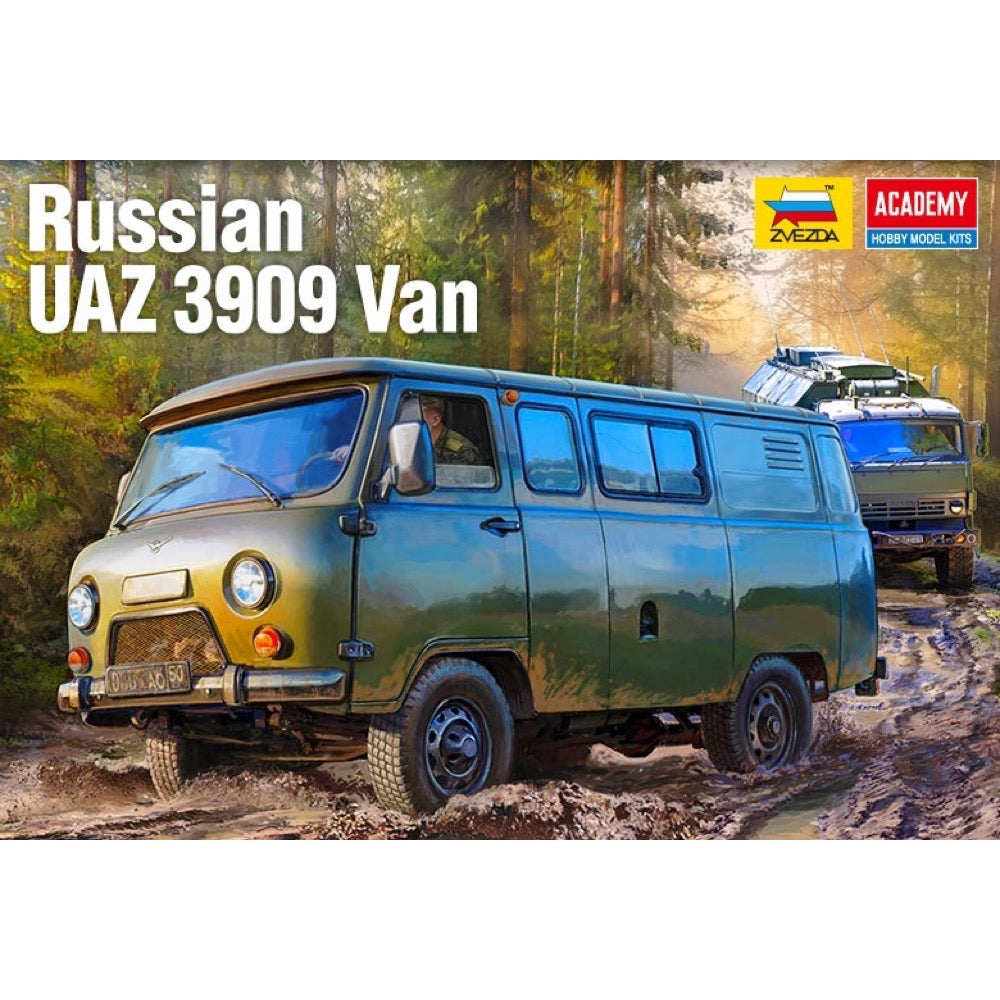
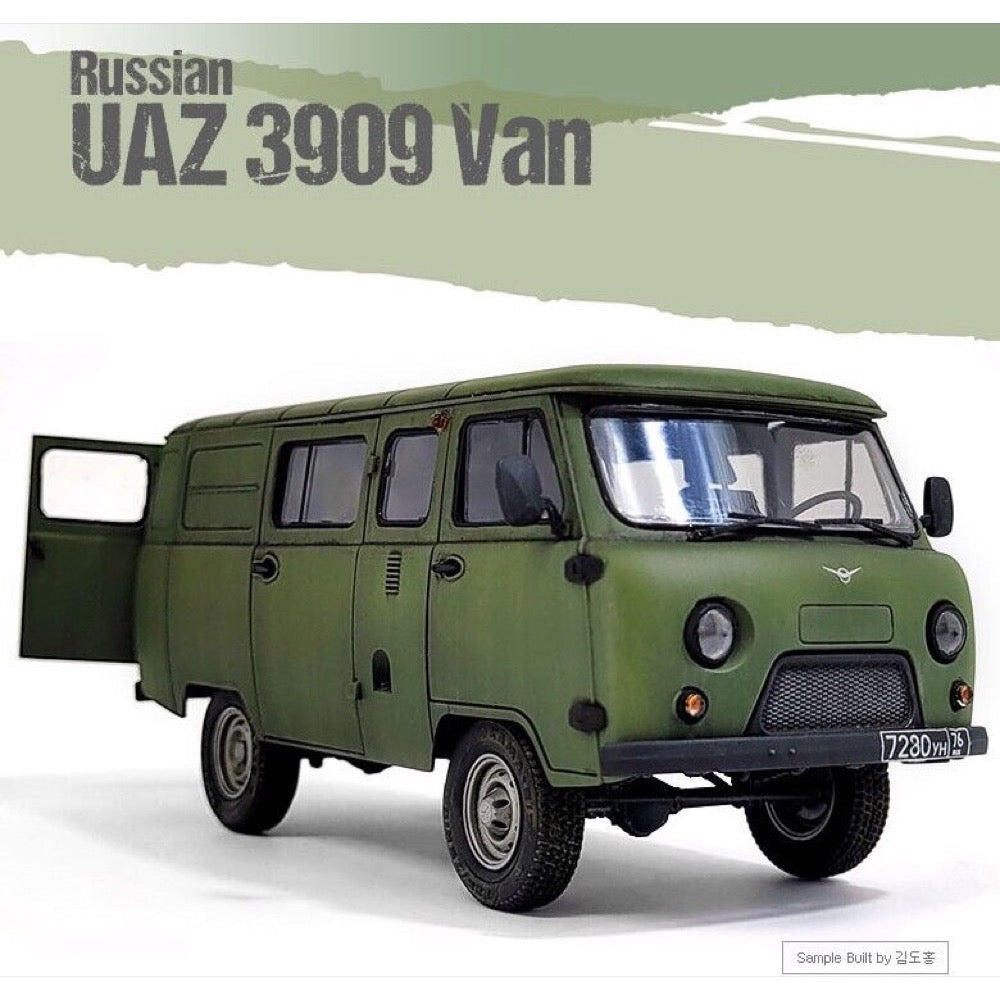
Current 4x4 light utility truck of the ROK Army. Made by Kia Corp, model name KM450, military designation K311A1, it is a licence-built version of the late 1960s US Kaiser Jeep 'Five Quarter' M715.New tooling. Build with or without rear cover. Includes driver figure, photo-etch parts and window masking. Choice of markings for ROK Army, Air Force & Marine Corps; Philippine Army, Chilean Marine Corps.
Academy brings us a 1/35-scale model kit of the K311A1 cargo truck! A modest number of parts are used to express this vehicle's form; decals for six versions are included, mainly Korean military versions. Masking stickers for the clear parts are also included, as are camouflage pattern decals for the driver figure.
This is an injection-plastic military vehicle model kit.
Includes
Masking stickers, decals for 6 versions
Size
15.2cm long, 5.7cm wide when completed


ACADEMY
Academy 13554 1/35 Soviet M...
$69.99
$74.99
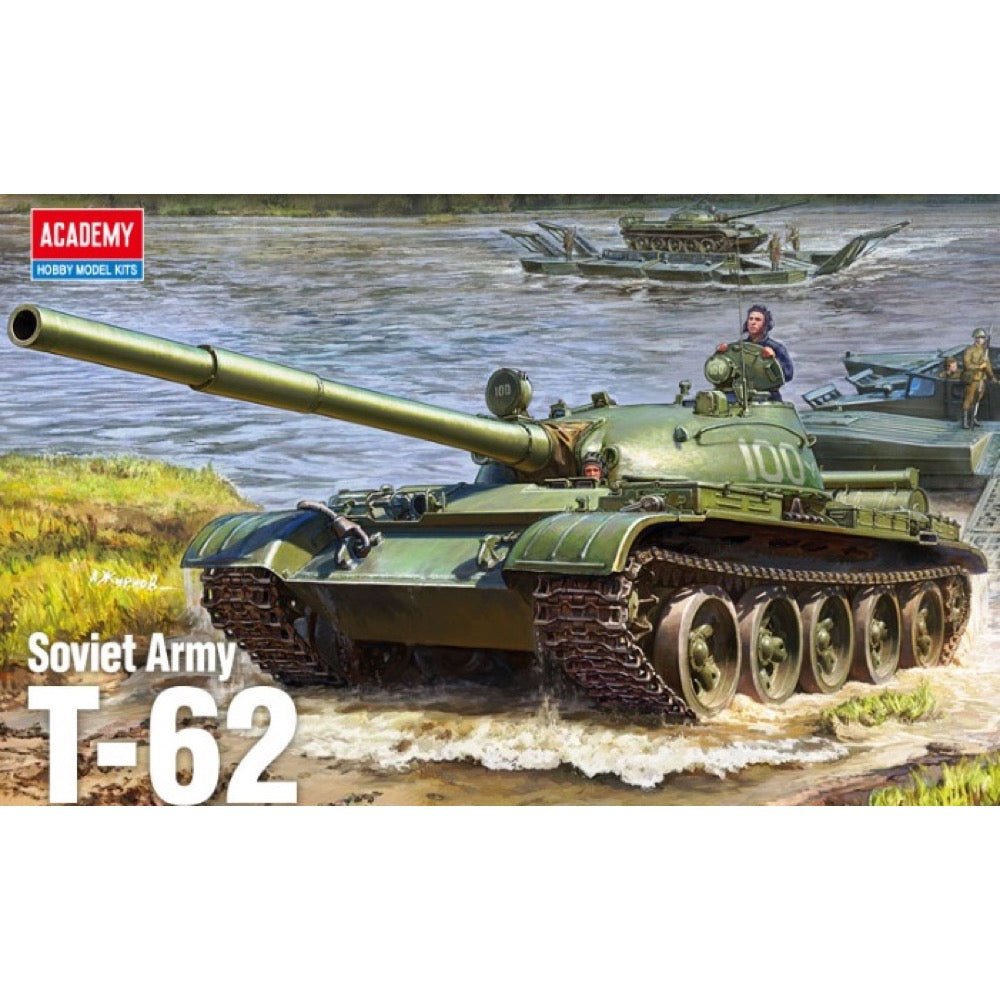
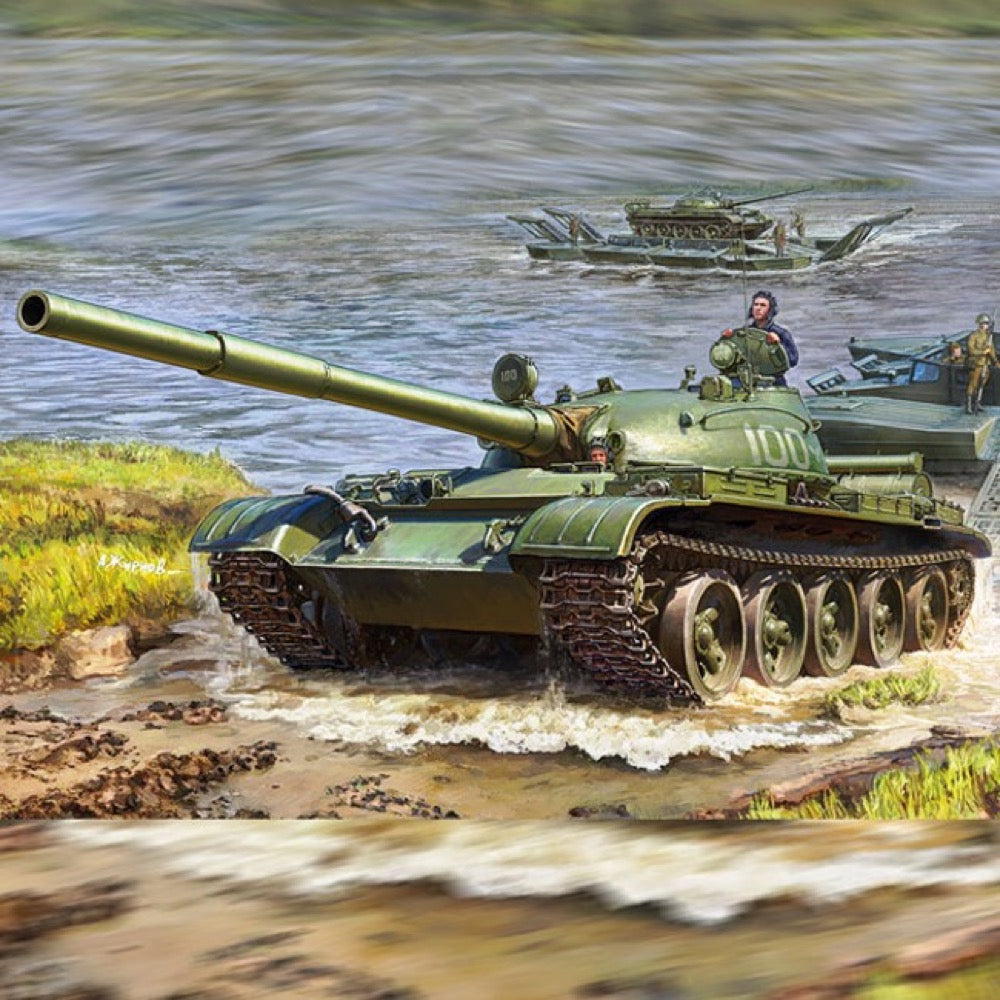
The T-34 was a Soviet medium tank from the Second World War and the post-war period.
The first prototypes were built in 1937-1940, and serial production in the USSR was carried out in 1940-1957. About 84,000 vehicles of this type were built in its course, which makes the T-34 one of the most produced tanks in history! The drive was provided by a single engine V-2-34 with a power of 500 hp. The length of the car - in the T34 / 76 version - was 6.68 m, with a width of 3 meters. The armament consisted of a 76.2 mm F-34 gun and two 7.62 mm DT machineguns. The main armament in the T-34/85 version was the 85mm ZIS-S-53 gun.
The T-34 is undoubtedly one of the most famous tanks in the history of both World War II and military in general, representing a specific symbol of Soviet victory in the war with the Third Reich. The vehicle was developed for the needs of the Red Army as a successor to the so-called pursuit tanks from the BT series (BT-5 and BT-7), but also the T-26 tank. Work on the car started in 1937 in a special design office at the Steam Engine Factory in Kharkiv. Initially, the works were managed by Eng. Adolf Dik (he also made the first sketches of the new car), and after his arrest by the Soviet security authorities, Mikhail Koszkin managed the work. Initially, the vehicle was designated as A-20. However, a second prototype (A-32) was quickly built, with a main armament in the form of a 76.2 mm cannon and much thicker frontal armor. It was the latter prototype that was finally adopted for production. It can be assumed that when it was introduced into service, the TT-34 was a very successful tank in many respects. It was characterized - as in 1940 - with a very strong weapon, it had a well-profiled armor based on sloped armor plates, as well as very high mobility and off-road driving properties. The disadvantages include the very poor ergonomics of the car or the poor optics used in the first production batches. Despite these shortcomings, when the T-34 appeared on the Eastern Front, German troops were greatly surprised by it. The high overall rating of the T-34 and its combat values determined its mass production and making it the basic tank of the Red Army during the fights in 1942-1945. They also resulted in further improvements to the structure, e.g. in 1942 a new hexagonal tower appeared, improving the quality of work of crew members with the commander's cupola. The engine and gearbox were also improved. However, in 1944, the T-34/85 model was introduced into service, with a completely new three-man turret and the main armament in the form of an 85 mm cannon. The T-34 tank fought in virtually all major battles fought between the Red Army and the Wehrmacht on the Eastern Front in 1941-1945: starting at the Battle of Moscow, through the battles of Stalingrad and Kursk, Operation Bagration, and the capture of Berlin. After 1945, the T-34 tank was still in service, it was also widely exported outside the USSR to countries such as Czechoslovakia, Poland, East Germany, Hungary and Syria.
This is a 1/35th scale Soviet Medium Tank model kit. The most numerous of all WWII tanks, this late war variant with 85mm ZiS-S-32 main gun was equipped with Degtyaryov (DT) machine gun.
Plastic model for gluing. The kit does not include paints or glue.
Features
WWII Soviet medium tank
85mm ZiS-S 53 main gun and DT machine gun
Semi-connected tracks
Select from 8 markings
Photo etched parts included
ACADEMY
Academy 13556 1/35 German P...
$56.95
$64.99
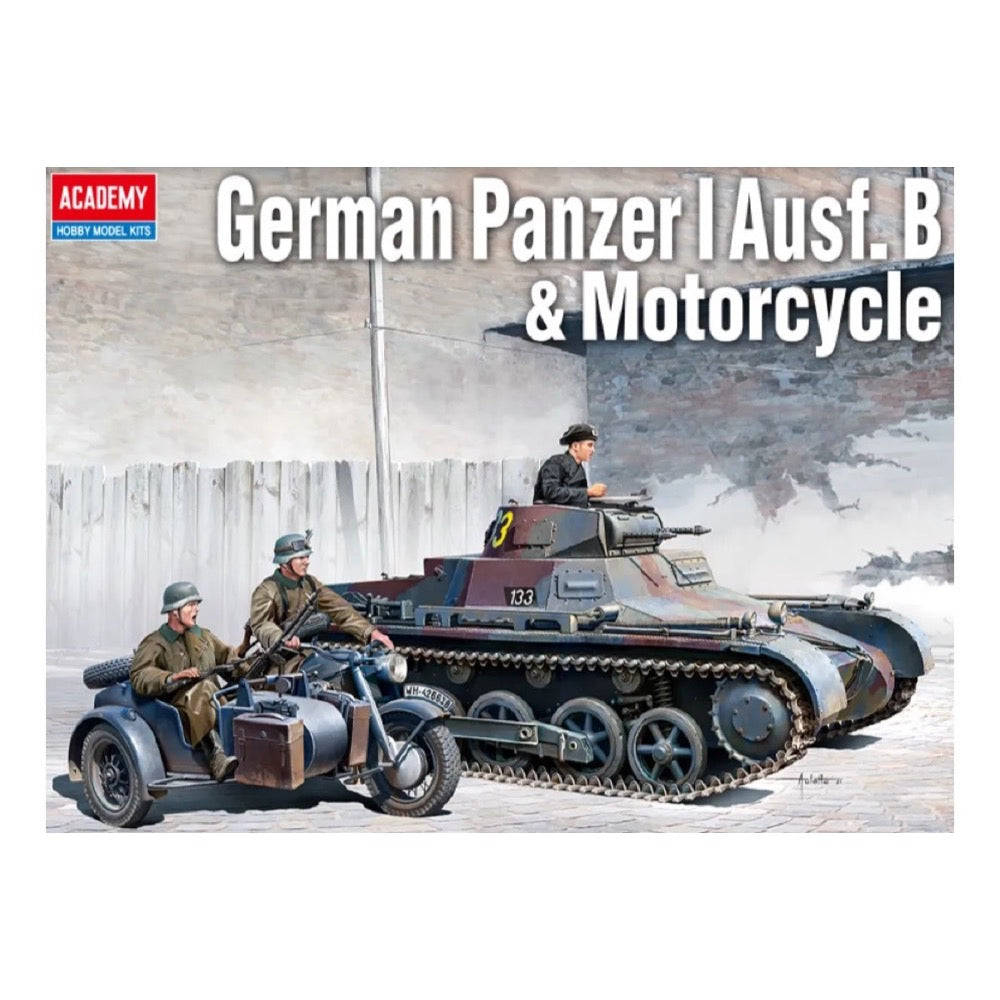
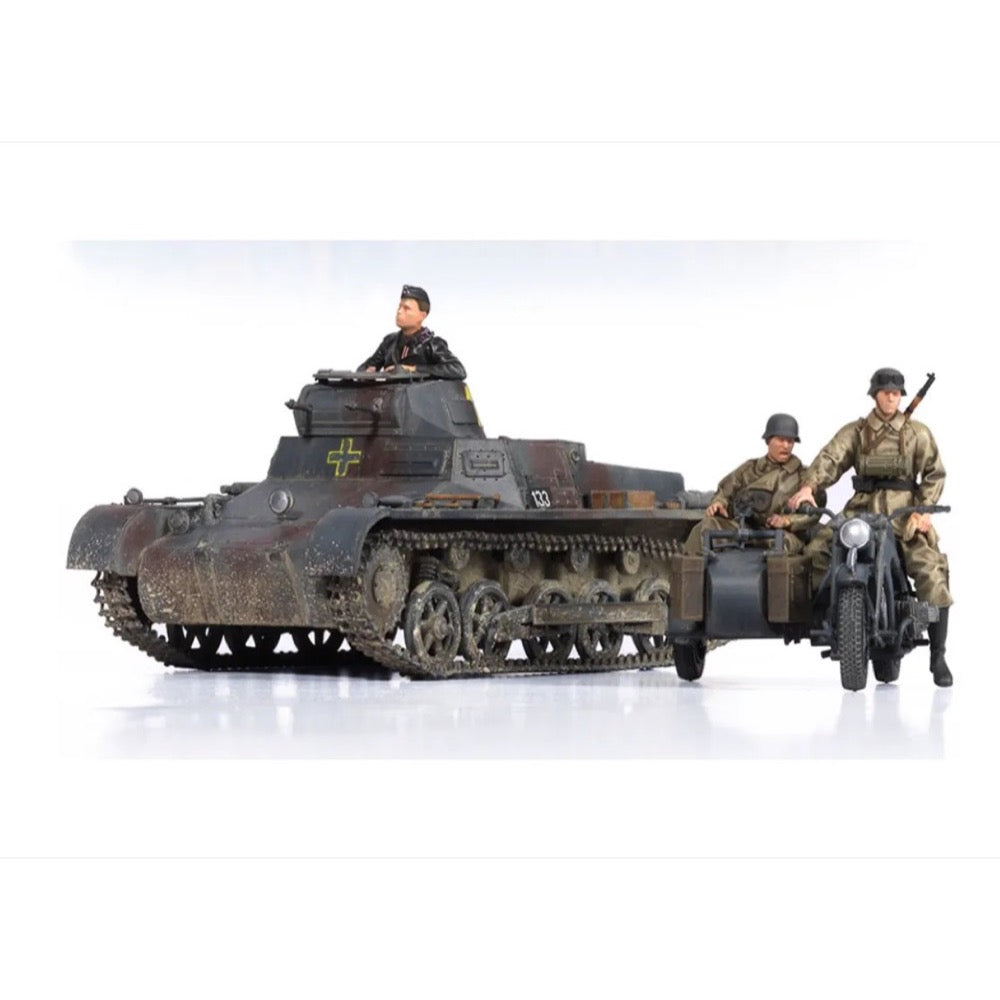
The Panzerkampfwagen I Ausf. B was a light tank used by the German army during the early stages of World War II. Despite its limitations, it played a crucial role in the Blitzkrieg tactics, acting as a reconnaissance and infantry support vehicle.
This 1/35 scale model kit by Academy allows you to recreate the Panzer I Ausf. B alongside a motorcycle with a sidecar, offering a unique and dynamic diorama opportunity. The kit includes photo-etched parts for enhanced realism and three figurines. You can choose from five authentic paint schemes depicting the tank in various campaigns.
Features
High-quality plastic construction
Includes two detailed models:
Panzer I Ausf. B with intricate details
Motorcycle with sidecar
Tank hatch can be open or closed
Includes three figurines
Paint Schemes
Pz.Kpfw. I Ausf. B, 4 Panzer Division, Poland, 1939
Pz.Kpfw. I Ausf. B, 3 Panzer Division, France, 1940
Pz.Kpfw. I Ausf. B, 1 Panzer Division, Poland, 1937
Pz.Kpfw. I Ausf. B, Unknown Unit, Poland, 1939
Pz.Kpfw. I Ausf. B, Pz.Abt.z.b.V.40, Denmark, April 1940


ACADEMY
Academy 13557 1/35 M113 Zel...
$58.95
Academy brings us a 1/35-scale model kit of the M113 Armored Personnel Carrier "Zelda," as used by the Israel Defense Forces! The vehicle's characteristic hollow armor (toga armor), troop room and engine are precisely reproduced. It can also be assembled as a command communication type. A wealth of accessory parts is included, as well as basic photo-etched parts and five figures.


ACADEMY
Academy 13560 1/35 Polish L...
$69.99
$74.99
The K2 Black Panther is a modern 3rd generation South Korean main battle tank manufactured by Hyundai Rotem. The first prototypes of the vehicle were made in 2004, and serial production started in 2013 continues to this day. The exact number of tanks produced is unknown. Estimates are about 100 tanks of this type in the line. The K2 is powered by the 1500hp MTU MT 883 engine. The vehicle is armed with a single 120mm tank gun, 1 7.62mm machine gun and 1 12.7mm machine gun.
Despite the fact that the modern K1 tank was introduced to the line in the early 1990s, the command of the South Korean army decided to develop a new tank that would complement, and eventually probably a successor to, the K1 vehicle. It was also decided to rely on the domestic arms industry as much as possible and use the help of foreign companies only as a last resort. What's more - the most advanced technology was chosen. As a result, the K2 tank has a very modern SKO (fire control system), an effective 120mm gun, very high mobility and maneuverability, and powerful armor that is a rare combination of composite and reactive armor of the ERA and NERA type. Undoubtedly, the K2 is a machine at least comparable to the western 3rd generation fronts, such as the Leopard 2 or the M1 Abrams. Contrary to them, however, like the French Leclerc, it uses an autoloader, which significantly increases the rate of fire and allowed to reduce the crew to 3 people. Due to the technological advancement, the unit cost of the K2 tank is estimated at approx. 8.5 million. dollars by 2014 prices. At the moment, K2 is not exported.
The K2GF model from Academy in 1/35 scale is a detailed replica of a military vehicle used by the Polish Armed Forces. The model in this scale allows for precise reproduction of many details and is an excellent choice for both advanced modelers and military vehicle enthusiasts.
Includes
Plastic elements: Hull, turret, chassis, interior and exterior details made of high quality plastic.
Photo etched parts: Additional elements for greater precision and realism, such as air intake covers, handles and other details.
Tracks: Elements for assembling individual track links, which provides greater flexibility and realism.
Assembly instructions: Detailed, with illustrations that guide step by step through the process of assembling the model.
Decals: Signs and emblems for different versions of the vehicle, allowing you to personalize the model.
ACADEMY
Academy 13562 1/35 USMC M4A...
$62.99
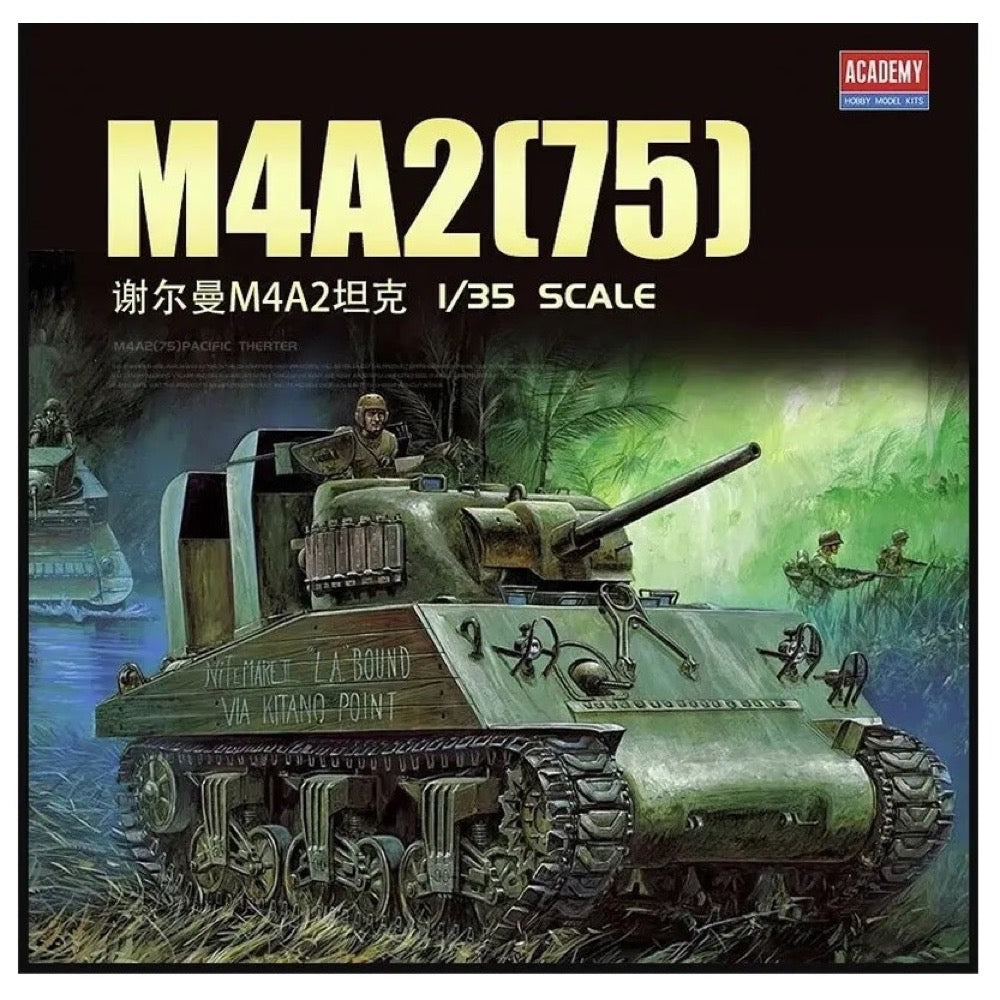
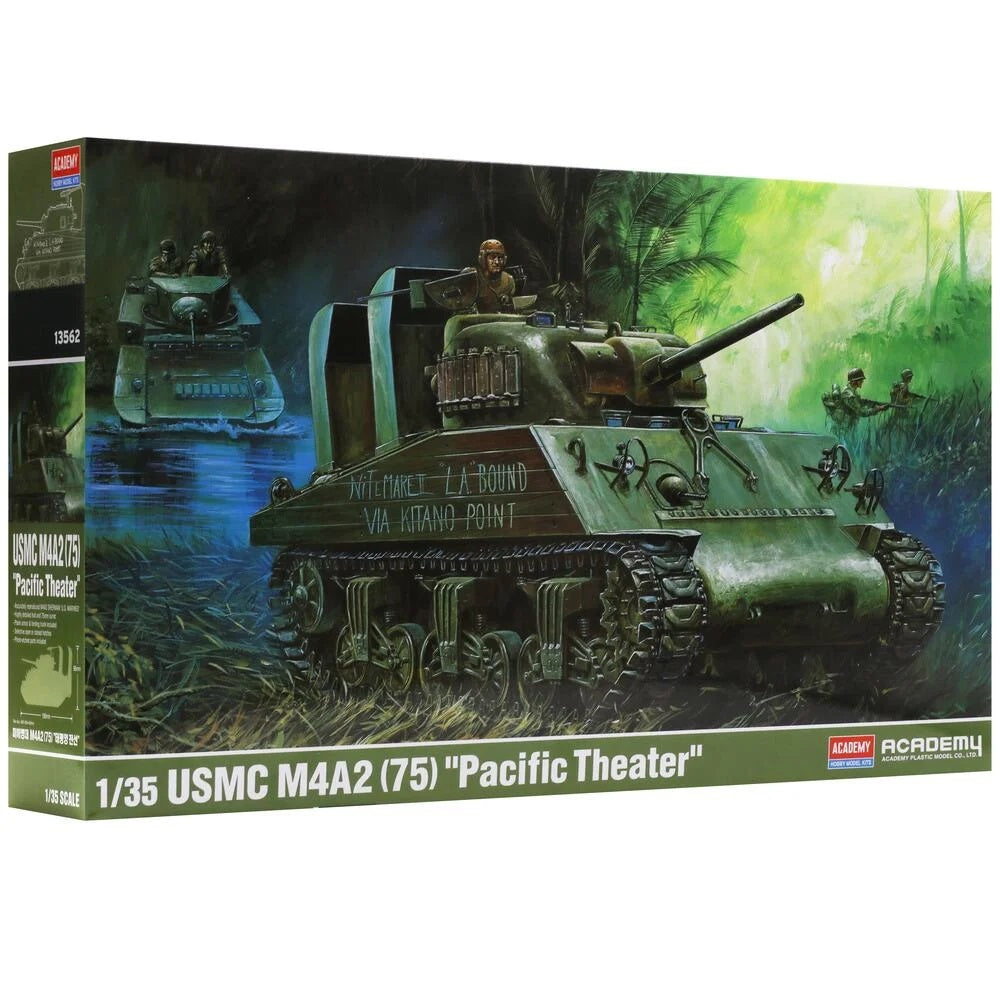
The 1/35 USMC M4A2 (75) "Pacific Theater" scale model kit by Academy is not just a detailed and accurate representation of the M4A2 Sherman tank, but a tribute to its strategic importance. This variant, known for its diesel engine and extensive use in the Pacific Theater of Operations, played a crucial role in the island-hopping campaigns against Japanese forces. The model captures the rugged and battle-worn appearance of these tanks, symbolizing their resilience and strategic significance.
Contents
1x Unassembled Model Kit
1x Assembly Instructions
1x Decal Sheet
1x Original Retail Box with Dimensions: Length: 40.5cm Height: 26.5cm Width: 7cm
Specification
Completed Length: 19 cm
Completed Height: 9.6 cm
Scale: 1:35
ACADEMY
Academy 13564 1/35 U.S.Army...
$ PRICE IN PROGRESS!
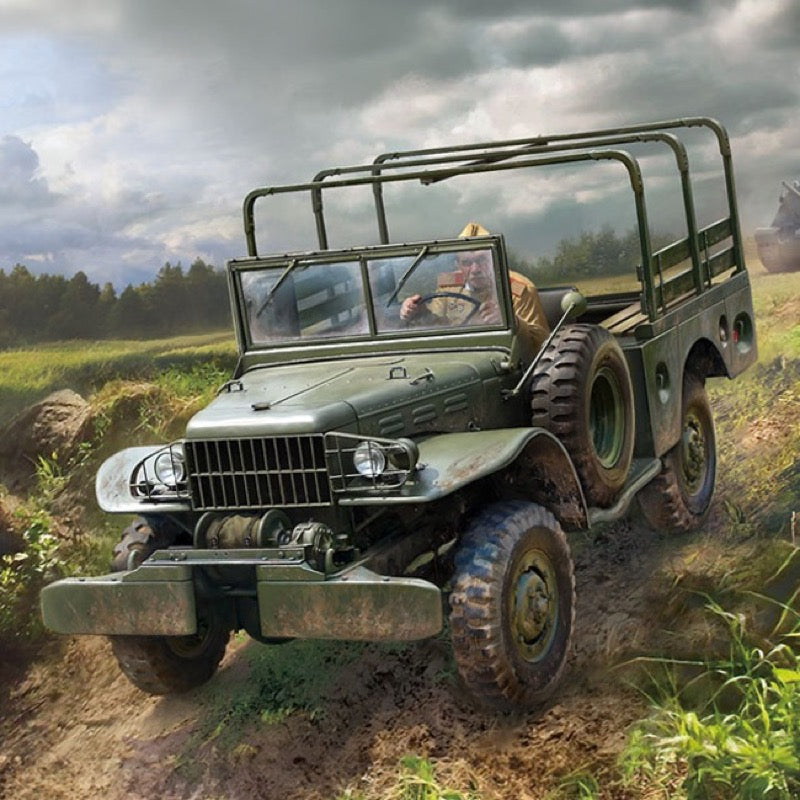
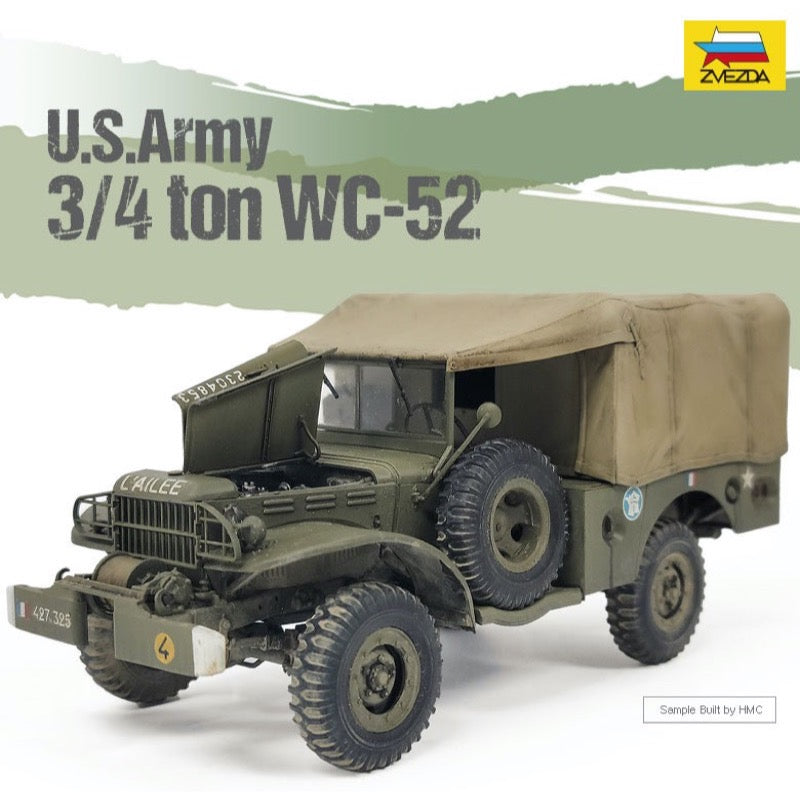
[1/35] 13564 US Army 3/4t WC-52 Military Truck


ACADEMY
Academy 13565 1/35 Russian ...
$ PRICE IN PROGRESS!
The BMP-3 is a Soviet and Russian infantry fighting vehicle, successor to the BMP-1 and BMP-2. The abbreviation BMP stands for Boevaya Mashina Pekhoty (literally "infantry combat vehicle").
The BMP-3 is a Russian-made tracked amphibious infantry fighting vehicle, a successor to the BMP-1 and BMP-2, which entered service with the Soviet army in 1990 and made its first public appearance the same year. Kurganmashzavod of Kurgan, Russian Federation manufactures the chassis and the Instrument Design Bureau (KBP) of Tula is responsible for the turret. It is a tracked, armored, amphibious vehicle designed to engage armored ground and air targets while stationary, on the move, and afloat. The first export customer was Abu Dhabi, part of the United Arab Emirates, which placed an initial order for 330 vehicles that were delivered between 1992 and 1995. These vehicles have a number of modifications to meet the specific operational requirements of Abu Dhabi, with some of the vehicles being fitted with a Namut thermal sight which includes a thermal camera mounted on the left side of the turret rear and provide a thermal view for the gunner. In September 2015, the Russian defense industry announced that Iraq had a plan to acquire 500 BMP-3 tracked armored IFVs (Infantry Fighting Vehicles) from Russia. According to the SIPRI (Stockholm International Peace Research Institute) Arms Transfers Database, Iraq ordered 300 BMP-3 IFVs in 2015 that were delivered in 2018-2019.