
Reset


ACADEMY
Academy 13566 1/35 R.O.K. A...
$60.95
Academy brings us a 1/35-scale, completely new-mold model kit of the K21 infantry fighting vehicle currently in use by the South Korean Army! The complex details of this modern combat vehicle are expressed with precise molding; each hatch can be built opened or closed. The tracks are molded from soft resin, and stickers for each periscope lens, photo-etched parts, and South Korean Army decals are also included.
Includes
Decals, photo-etched parts


ACADEMY
Academy 14102 1/350 USS Oli...
$54.99
USS Oliver Hazard Perry (FFG-7) was an American missile frigate from the Cold War period. The keel for this unit was laid in 1975, and the launch took place in September 1976. At the time of launching, the total length of the ship was 136 meters and a width of 134 meters. Full displacement reached approx. 4,100 tons, and the maximum speed was approx. 29-30 knots. The armament consisted of a single Mk.13 rocket launcher, one 76mm OTO Melara gun, a single 20mm Vulcan Phalanx set, and two 324mm triple torpedo tubes. The ship could use two Kama SH-2 Seasprite helicopters.
The USS Oliver Hazard Perry was the leading unit of the class of frigates of the same name, which totaled 69 ships. Units of this type were built for offshore and oceanic operations, as frigates intended primarily for fighting enemy submarines (ZOP). On the other hand, the possibilities of destroying air and surface targets were limited. The USS Oliver Hazard Perry (FFG-7) was built at Bath Iron Works in Bath, Maine. The US Navy was one of the first to undergo a series of very intensive at sea pre-entry tests, combined with the detonation of explosives near the ship. In 1994, the frigate took part in a BALTOPS exercise. Three years later she was withdrawn from active service. In 2005, the USS Oliver Hazard Perry (FFG-7) frigate was scrapped.
Academy's excellent kit of the U.S. Navy's guided missile frigate USS Oliver Hazard Perry features a full hull formed by left and right halves, the option to make it a waterline model (cutting will be required), finely molded masts and radars, two SH-60 anti-submarine helicopters, and decals.
This is an injection-plastic ship model kit.


ACADEMY
Academy 14103 1/350 Admiral...
$59.95
$69.99
Admiral Graf Spee was a German heavy cruiser, also known as a pocket battleship, the keel of which was laid in 1931 and launched in June 1934. The battleship entered the rope service in the German Navy (German Kriegsmarine) in January 1936. The ship was 186 m long, 21.6 m wide, and had a full displacement of 16,200 tons. The maximum speed of Admiral Graf Spee was around 28-29 knots. The main armament was 6 280 mm guns in two triple turrets, and the secondary armament included: 8 150 mm guns or 6 105 mm guns.
Admiral Graf Spee was one of three Deutschland class ships launched in the 1930s. The ships of this type were theoretically built in accordance with the provisions of the Versailles Treaty of 1919, which imposed the maximum displacement on German ships, but in fact their full displacement clearly exceeded these limits. Deutschland-type units were built in such a way as to have an overwhelming advantage in the artillery battle with any British or French heavy cruiser. The combat career of Admiral Graf Spee began during the Spanish Civil War (1936-1939). However, his participation in World War II was very short - on August 21, 1939, he sailed to the South Atlantic, and at the end of September that year he was ordered to attack every Allied merchant ship. From September 30 to December 7, 1939, he sank 9 British merchant ships. On December 13, 1939, it was detected at the mouth of the La Plata River by Allied ships (the so-called G squadron). There he fought a short battle with the Allied forces, and then was blocked by them in port. As a result, it was self-sunk by the crew on December 17, 1939.
Academy's kit of the German pocket battleship Admiral Graf Spee is here! This finely detailed kit can be built as either a full-hull or waterline model (cutting of the hull along a scribed line will be required to build the waterline version). Separately molded plastic guard rails are included. Main guns feature open muzzles. Includes display stand with ornate name plate. A great large-scale kit a fantastic small-scale price!
This is an injection-plastic ship model kit.


ACADEMY
Academy 14105 1/350 H.M.S. ...
$87.95
$99.99
HMS Warspite was a British battleship laid down in 1912, launched in November 1913, and commissioned in the Royal Navy in March 1915. The total length of the ship was 195 m, width 27.6 m, and full displacement - 33,400 tons. The maximum speed of battleship Warspite was around 25 knots. The main armament at the time of the launch was eight 381 mm guns in four twin turrets. The secondary armament consists of 12 152mm guns, 2 76mm guns, 4 47mm pom-poms, and 4 533mm torpedo tubes.
HMS Warspite was one of five Queen Elizabeth-class battleships. Battleships of this type were built just before the outbreak of World War I, as a British response to the rapid naval armament of the Second German Reich. They are often referred to as super-dreadnoughts - for the first time in the history of the navy, 381 mm artillery with 42-caliber barrels was used on them, and for the first time battleships reached a speed of about 25 knots. Many of the solutions used on this type were reflected in later British battleships. All ships of the Queen Elizabeth class also underwent significant modifications in the interwar period: first of all, they received new engine rooms, better and more efficient boilers, their armor was thickened, the profile of superstructures was changed and the anti-aircraft artillery was significantly expanded. Thanks to these upgrades, these ships were not inferior to other German or Italian battleships, as well as many Japanese battleships - with the exception of the Yamato class. The HMS Warspite battleship was built at the Dockyard shipyard in Devonport. From the moment he entered service, he was part of the Grand Fleet and, as part of it, took part in the Battle of Jutland in 1916, in which he did not suffer any serious damage. For the rest of World War I, he did not enter into any serious combat contact with German ships. However, he took part in the internment of German units in Scapa Flow. In the interwar period, it served both in the Atlantic Ocean and in the Mediterranean Sea. His glorious and rich combat route during World War II began with the struggle at Narvik in April 1940, contributing significantly to the Allied success in the so-called II Naval Battle of Narvik on April 13, 1940. Shortly thereafter, he was transferred to the Mediterranean Sea where he took part in the Battle of Cape Matapan (March 1941). In the second half of 1941, he was sent to the USA for modernization, which lasted until the end of that year. In early 1942, it found its way to the Indian Ocean, but later returned to the Mediterranean Sea - shortly before the invasion of Sicily in July 1943. In September of that year, it supported the Allied landing at Salerno, where it suffered severe damage. After the renovation, it supported the Allied forces landing in Normandy in June 1944 with their artillery fire. The last time he took part in the action was November 1944. After the war, in July 1946, it was scrapped.
Academy's detailed kit of the British battleship HMS Warspite as it appeared in 1943. Includes photo-etched metal detail parts and a display stand.
This is an injection-plastic ship model kit.


ACADEMY
Academy 14107 1/350 USS Ind...
$84.99
$89.99
The USS Indianapolis (CA-35) was an American heavy cruiser the keel of which was laid in 1930, launched in November 1931, and commissioned by the US Navy in 1932. The total length of the ship was 186 m, width 20.1 m, and standard displacement - at the time of launching - 10,100 tons. The maximum speed was up to 32.7 knots. The main armament at the time of the launch was 9 203 mm guns in three turrets of three guns each, and the secondary armament was mainly 8 127 mm guns.
USS Indianapolis (CA-35) was one of two Portland-class heavy cruisers. Units of this type were originally ordered as Northampton type, but their design was changed during construction. The changes concerned the reinforcement of secondary weapons and the improvement of armor. The torpedo armament was also abandoned. Generally, however, they were successful units, with a combat value similar to the Northampton and New Orleans cruisers. USS Indianapolis was built at New York Shipbuilding in Camden, NJ. At the outbreak of World War II, the unit was not stationed at Pearl Harbor, and thus avoided any damage. In February and March 1942, it covered the USS Lexington aircraft carrier as part of Task Force 11. In the same year and at the beginning of 1943, the unit served in the North Pacific and took an active part in the fighting in the Aleutian region. In November 1943, she supported the US Marines operations in Tarawa and Makin. In 1944, the cruiser supported American landing operations in the Caroline Archipelago and took part in the Battle of the Philippine Sea. In the course of operations in the Pacific, the cruiser often acted as the flagship of the V Fleet commanded by Adm. Raymond Spruance. In July 1945, the USS Indianapolis carried nuclear payloads for Little Boy and Fat Man bombs from the US west coast to Tinian Island as part of a top secret mission. The USS Indianapolis was sunk on its way back by the Japanese submarine I-58 on July 30, 1945. Of the 1,195 crew, only 316 sailors were rescued.
A detailed kit of the fateful US Navy cruiser Indianapolis can be built as a full-hull or waterline model.
This is an injection-plastic ship model kit.


ACADEMY
Academy 14109 1/350 German ...
$82.95
Bismarck was a German battleship, the keel of which was laid in 1936 and launched in February 1939. The battleship entered the rope service in the German Navy (German Kriegsmarine) in August 1940. The ship was 251 meters long, 36 meters wide, and had a full displacement of 53,000 tons. Bismarck's top speed was around 29-30 knots. The main armament was 8 380 mm guns in four twin turrets, and the secondary armament included: 12 150 mm guns or 16 105 mm guns.
The Bismarck was the first ship of the type with the same name - the Bismarck. It was ordered to replace in line the old battleship Hannover, completely obsolete in the 1930s. At the time of launch, Bismarck was the largest German ship and the largest European battleship. It had good armor, and its main or secondary armament was inferior to its counterparts on British ships. He made his maiden voyage in September 1940, when he was ferry to Gdynia, which was to be his home port. Bismarck's combat trail during World War II was very short. Bismarck set out on its first combat voyage on May 19, 1941 - it was supposed to perform cruising operations in the Atlantic and attack primarily Allied convoys. In carrying out this plan, Bismarck, with the accompanying heavy cruiser Prinz Eugen, was already crossing the Danish Strait a few days later. On May 24, a battle took place in this strait between the German team and British ships, as a result of which the battlecruiser HMS Hood was sunk and Bismarck itself was badly damaged. After this battle, significant Royal Navy forces - including the Polish destroyer ORP Piorun - were directed against Bismarck, which the German ship tracked down and sent to the bottom on May 27, 1941. It is worth noting that there is a probable hypothesis assuming that the battleship Bismarck was self-sunk by the crew in connection with the damage sustained in combat on May 27, which made it impossible to return to the base on its own.
This is an injection-plastic aircraft model kit.


ACADEMY
Academy 14110 1/350 Ship Cu...
$13.95
The clippers, especially those built in the second half of the nineteenth century, were perhaps the most beautiful ships ever built and represented the pinnacle of maritime engineering in the "golden age of sails". The best known of them is undoubtedly "Cutty Sark". This sailing ship was built in 1869 at the special request of the famous Scottish shipowner, Captain John Willis at the Clyde shipyard. The assumption of the project was to build a ship capable of defeating the then fastest clipper "Thermopylae", launched just a year earlier. To achieve the intended goal, the latest technologies and the highest quality materials were used. Paradoxically, it was the costs of materials and highly skilled labor that caused the original contractor to go bankrupt and the construction had to be completed by another, neighboring shipyard. When the operation was finally successfully completed, the fastest ship of that time was obtained, which, thanks to the enormous sail area, achieved a speed of over 17 knots. Of course, such an exaggerated performance was not only intended to serve propaganda purposes, but also to be used in practice. Cutty Sark's job was to transport tea from China to Great Britain. Time played a big role here because the faster the fresh harvest was delivered to the London market, the more they got the price. Each year, the journey from China was a real race and at the same time a torment for the crew, mercilessly urged by the captain, who, in the hope of rewarding money and prestige, was once again trying to break the speed record. The good times for clippers ended at the end of the 19th century, when they were no longer able to cope with the competition from modern steam ships. The Cutty Sark met the fate of many other tall ships. In 1895, it was sold to a Portuguese company, where it served as a tramp for many years, and then a barge with no sails. In June 1922, a retired sea wolf, Captain Dowman, bought the dilapidated ship and towed it to England. There, after many years of work, the Cutty Sark was restored to its former glory, primarily by installing new, although in accordance with the original sails, and in 1938 the Thames Nautical Training College in Greenhithe was presented as a training ship. In 1952, an association working for the Cutty Sark was established and it was on his initiative that five years later the legendary sailing ship finally ended its colorful career and permanently anchored at the Greenwich quay. Technical data: Displacement: 2,100 t, length: 85.1 m, width: 10.9 m, draft: 6 m, speed: up to 17.5 knots, crew: 28-35 people.
This model kit from Academy is a must-have for any enthusiast of militaria. The 1:350 scale clipper ship Cutty Sark is a stunning addition to any collection. The kit includes all the necessary pieces to construct the ship and is still in its original packaging, never opened. The attention to detail in this model is impressive, with intricate designs and high-quality materials that will make it a lasting piece. Whether you're a collector or simply enjoy building models, this kit is sure to impress. Don't miss out on the opportunity to own this beautiful piece of history.

ACADEMY
Academy 14112 1/350 USS Ind...
$ PRICE IN PROGRESS!
The Portland class cruisers were originally intended to be little more than an Improved Northampton class. As a follow-on class to the underweight Northhamptons, originally 5 were intended, but only 2 were completed as Portlands. The other three hulls were allocated into the following New Orleans class. The Portlands had additional armor over the machinery spaces and double the secondary battery of the Northampton design, while the torpedo tubes and bulbous bow were deleted. The torpedo tubes no longer fitting into USN cruiser doctrine, and it was believed the bulbous bow would cause pounding and subsequent damage to the frames.
The USS Indianapolis CA-35 was commissioned in November of 1932. The Indianapolis worked up and trained heavily in both the Pacific and Atlantic oceans in the years preceding World War Two. She is perhaps best known for 2 events in her life; she carrying the parts for the atomic bomb dropped on Hiroshima, Little Boy, to Tinian Island in July of 1945. She is perhaps better know for her loss 2 weeks later, on 30 July 45, which led to the single largest loss of life at sea in the history of the United States Navy.
On 19 August 2017, a search team financed by Paul Allen located the wreckage of the sunken cruiser in the Philippine Sea lying at a depth of approximately 18,000 ft (5,500 m). On December 20, 2018, the crew of the Indianapolis was collectively awarded a Congressional Gold Medal.
ACADEMY
Academy 14204 1/200 New Bed...
$16.95
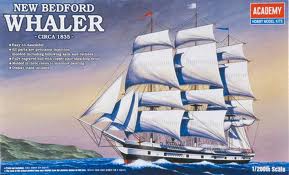
Charles W. Morgan is an American sailing whaling vessel that was launched in 1841 and performed its functions until 1920. It is worth adding, however, that the ship made its last voyage in November 1941! At the time of launching, the unit was approx. 34 m long, approx. 8.4 m wide and with a draft of approx. 4.2 m. The displacement reached approx. 350 tons. Charles W. Morgan was designed and built at the Jetrho ana Zacaharian Hillman shipyard in the city New Bedford, Massachusetts. It is worth adding that the city was famous in the nineteenth century for its whaling traditions and was a kind of "capital" of American whaling at that time. It is therefore not surprising that this is where, first of all, specialized shipyards for the manufacture of cetacean vessels were established. Ship Charles W. Morgan has made 37 voyages in the course of his long career. It was converted into a museum ship in the 1940s and is now the only surviving 19th century American whaling ship. In 1966, the ship was renamed National Historic Landmark.
This high quality plastic kit is a to scale model that will require assembly and may require additional tools, sold separately.
ACADEMY
Academy 14207 1/250 Roman W...
$48.95
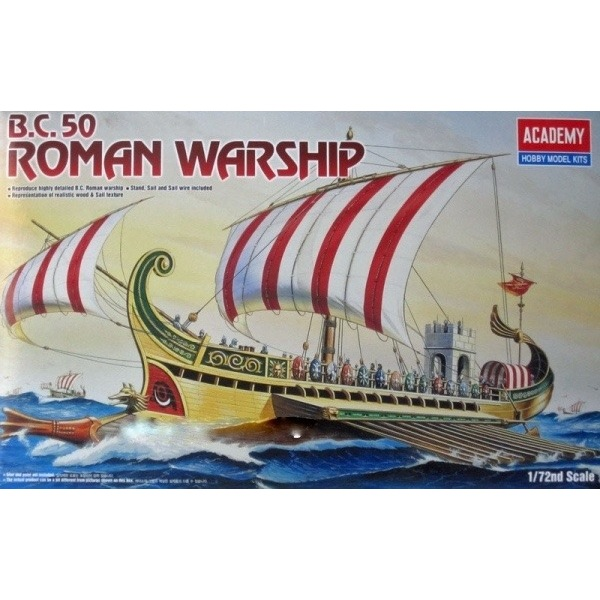
Roman warships were fearsome weapons and a major factor in the expansion of the Roman Empire. The ships were powered by sails and oars, and armed with the spears and swords of the soldiers on board
Highly detailed plastic kit of an ancient Roman ship. Featuring fantastic texture, and molded in tan, white and black, this very cool kit includes a stand, molded plastic sail, and sail wire.
This is an injection-plastic ship model kit.
ACADEMY
Academy 14209 1/800 USS Car...
$41.95
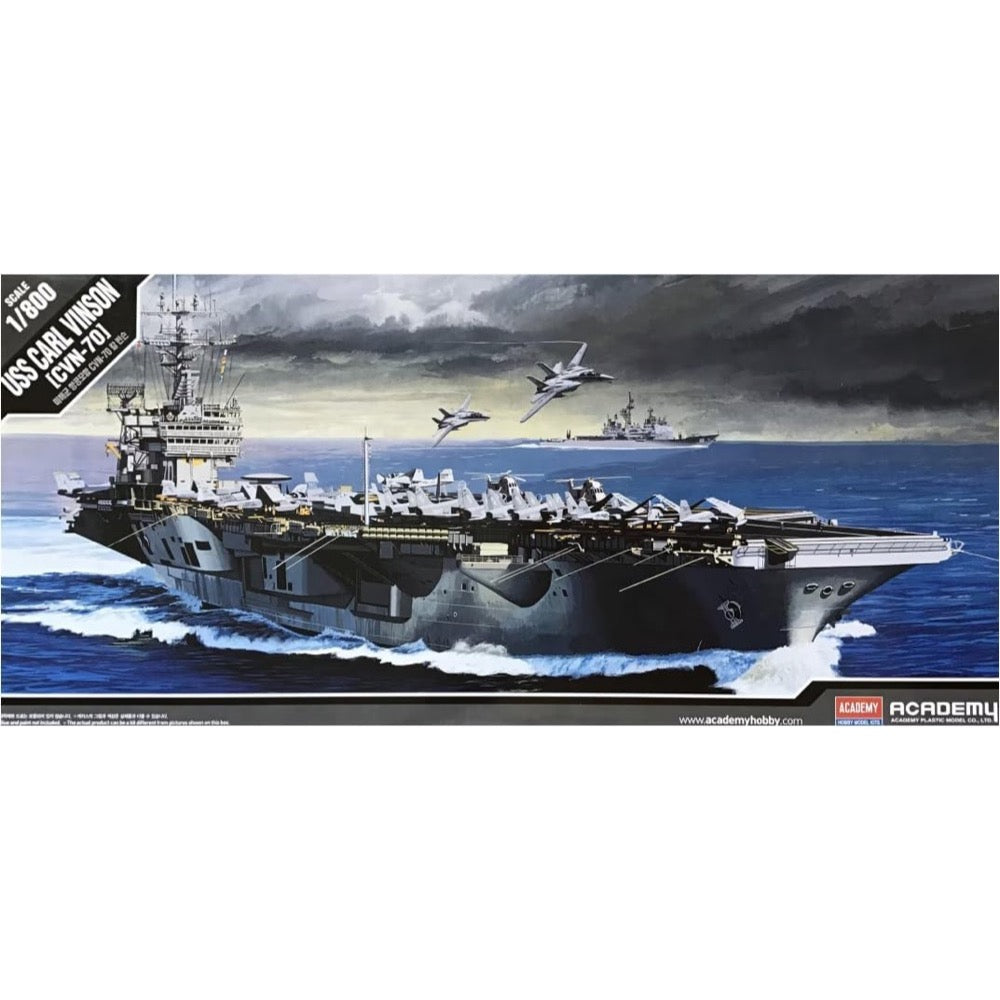
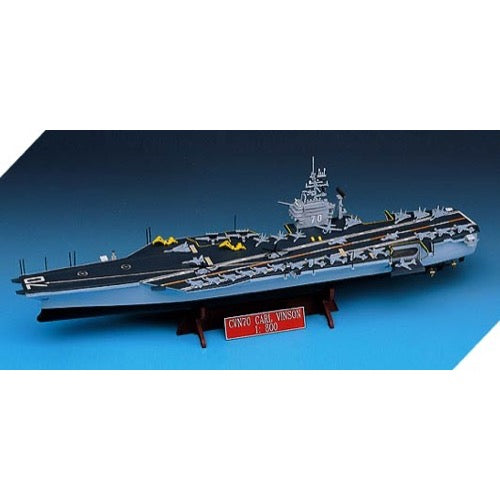
The Academy 14209 CVN-70 U.S.S.CARL VINSON model kit is a perfect replica of the US aircraft carrier. The kit is made of plastic and comes with detailed instructions for assembling. The kit is perfect for those who love to collect military replicas or for those who have served on this carrier. The kit is easy to assemble and has a high level of accuracy in its detailing. The carrier’s length measures 80cm, and the model kit is at a 1/800 scale. If you are an experienced model kit enthusiast or just starting, this kit is perfect for you. Like all model kits, this one will require some effort to put together, but it is well worth the effort. The level of detail you get with this kit is amazing. Once assembled, this model will look stunning when displayed with other replica military kits or by itself. This model also makes a perfect gift for any military or navy enthusiast.
Contents
The assembly instruction
Frames with plastic parts
Decals
Base
Specification
Scale: 1/800
Size: 42,2 x 8,2 x 8,6cm


ACADEMY
Academy 14210 1/800 Carrier...
$41.95
USS Kitty Hawk (CV-63) was an American classic-propelled aircraft carrier. The keel for this unit was laid in 1956, the launch took place in May 1960, and the commissioning to the US Navy took place in 1961. The total length of the ship was 323 meters, the overall width was 86 meters, and her displacement was about 84,000 tons. The maximum speed did not exceed 33 knots. The on-board armament initially consisted of Terrier rocket launchers (later replaced by Sea Sparrow launchers, and later - by RIM-116 launchers) and up to 4 sets of Vulcan Phalanx CIWS cal. 20 mm. The aircraft carrier could take up to 85-90 aircraft on board.
The USS Kitty Hawk (CV-63) was the lead ship of the carrier class of the same name - Kitty Hawk. The ships of this type were essentially a modernized version of the Forrestal ships. The main changes concerned the enlargement of ships, changes to the layout of the airlifts and the flight deck. The USS Kitty Hawk (CV-63) was built at New York Shipbuilding. Shortly after entering service, the carrier was directed to the Pacific and assigned to the United States' 7th Fleet. In the years 1962-1964, the unit courteously visited the ports of Japan and the Philippines. Since 1965, the USS Kitty Hawk on-board aircraft attacked targets in North Vietnam during the Vietnam War. In 1980, the unit underwent modernization and extended service life under the SLEP program. Four years later (1984), there was a collision between the aircraft carrier and a Soviet Victor-class submarine. Ultimately, the USS Kitty Hawk was decommissioned in 2009.
This fantastic kit includes a highly detailed superstructure and mast, finely engraved hull and deck details, deck elevators, and more. A full complement of 58 aircraft including fighters, bombers, helicopters, and E-2 Hawkeye Airborne Early Warning aircraft. Deck vehicles are also included in this kit. A comprehensive decal sheet, precise colour chart and a large display stand complete this marvellous kit.
Features
Highly detailed mast & superstructure
Various deck aircraft & vehicles included
Display stand with nameplate included
Requires plastic cement and paint.


ACADEMY
Academy 14212 1/800 U.S.S. ...
$47.99
USS Dwight D. Eisenhower (CVN-69) is a modern American nuclear powered aircraft carrier. The keel for this unit was laid in 1970, the launch took place in October 1975, and commissioning to the US Navy took place in 1977. The total length of the ship is 332.8 meters, the overall width is 76.8 meters, and the full displacement is about 92,000 tons. The maximum speed does not exceed 32-33 knots. The on-board armament currently includes: two Sea Sparrow missile launchers, two RIM-116 launchers and three 20 mm Vulcan Phalanx CIWS sets. The aircraft carrier can take on board up to 90 aircraft of such types as, for example: F / A-18 Super Hornet, EA-18 Growler, E-2A Hawkeye or Sikorsky MH / SH-60.
USS Dwight D. Eisenhower (CVN-69) is one of the Nimitz-class aircraft carriers. The ships of this type - until the introduction of the Gerald Ford class units - were the largest ships in history. They were also the first nuclear-powered carrier class in the history of the US Navy. From the outset, they were planned as the backbone of the US Navy strike force, and were expected to work closely with other shielding ships, such as destroyers, frigates, and submarines. They are almost a symbol of the dominance of the US Navy in the seas and world assessments. One of the aircraft carriers of this class is the USS Eisenhower (CVN-69), which was built at Newport News Shipbuilding in Newport News, Virginia. The ship did not manage to take part in the Vietnam War (1964 / 1965-1975), and did not take part in the unsuccessful Orli Szpon operations of 1980, even though she was at the Indian Assessment at the time. In 1982, the unit operated off the shores of Lebanon in connection with the ongoing civil war in that country. Two years later, the ship took part in the celebrations to mark the 40th anniversary of the Allied landing in Normandy. USS Eisenhower insured American activities during the First Gulf War in 1990-1991. The aircraft carrier remains in active service, but it is expected to be withdrawn from the line around 2030.
This model of the world's largest atomic aircraft carrier features a highly detailed mast and superstructure. 1:800 Scale, 34 deck aircraft and vehicles including: F-4J, LTV A-7B, EA-6B, A-6A, SH-3, E-2, F-14, RA5
Features
178 plastic pieces attached to sprues and molded in grey..
Super detailed display model..
The exterior hull of the carrier is finely engraved with variou minute details..
Propellers with long driveshafts reach out of the bottom of the hull..
Highly detailed deck superstructure assembly..
Accurately reproduced mast and radar assembly..
34 aircraft, such as jet fighters, bombers, and helicopters, ar included to dress the main deck..
A large display stand with a nameplate is included..
Waterslide decals..
Detailed pictorial instructions guide you through assembly..


ACADEMY
Academy 14213 1/800 USS Nim...
$41.95
USS Nimitz (CVN-68) is a US nuclear powered aircraft carrier. The keel for this unit was laid in 1968, the launch took place in May 1972, and the commissioning to the US Navy took place in 1975. The total length of the ship is 332.8 meters, the overall width is 76.8 meters, and the full displacement is about 92,000 tons. The maximum speed does not exceed 32-33 knots. The on-board armament currently includes: two Sea Sparrow missile launchers, two RIM-116 launchers and two 20 mm Vulcan Phalanx CIWS sets. The aircraft carrier can take on board up to 90 aircraft of such types as, for example: F / A-18 Super Hornet, EA-18 Growler, E-2A Hawkeye or Sikorsky MH / SH-60.
USS Nimitz (CVN-68) is the lead ship of the aircraft carrier class of the same name. The ships of this type - until the introduction of the Gerald Ford class units - were the largest ships in history. They were also the first class of nuclear-powered carriers in the history of the US Navy. From the outset, they were planned as the backbone of the US Navy strike force, and were expected to work closely with other shielding ships, such as destroyers, frigates, and submarines. They are almost a symbol of the dominance of the US Navy in the seas and world assessments. The leading vessel of this class is the USS Nimitz (CVN-68), which was built at the Newport News Shipbuilding in Newport News, Virginia. The ship did not manage to take part in the Vietnam War (1964 / 1965-1975), and the first major operation in which she took part was the unsuccessful operation Orli Szpon in 1980. A year later (1981), two F-14 Tomcats took off from the aircraft carrier, which shot down two Libyan Su-22s during a skirmish over the Gulf of Great Sirte. In 1985, the aircraft carrier operated in the Lebanon region. USS Nimitz also took an active part in the First Gulf War (1990-1991) and the Second Gulf War in 2003. USS Nimitz remains in active service, but it is expected to be withdrawn from the line around 2022.
This is an injection-plastic ship model kit.


ACADEMY
Academy 14214 1/700 Titanic...
$47.95
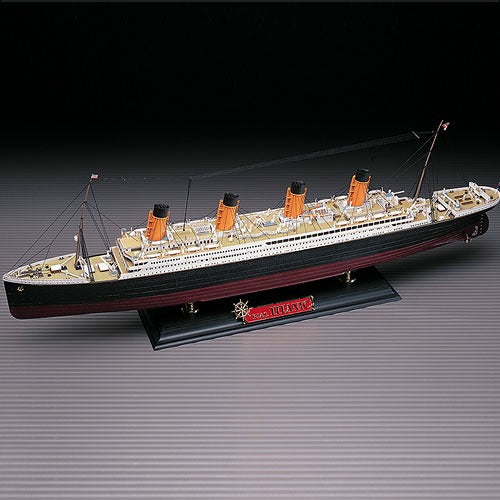
The RMS Titanic is a British ocean liner built for the White Star Line shipping line. The launch took place on May 30, 1911 at the Harland and Wolff shipyard. Hailed as a marvel of marine engineering, the Titanic was considered unsinkable. This legend turned out to be untrue during its maiden voyage, when the liner hit an iceberg in the North Atlantic and sank along with about 1,500 people on the night of April 14-15, 1912. It was one of the most spectacular sea disasters of the 20th century. Technical data: displacement (full): 46300t, length: 269m, width: 29.41m, draft: 10.5m, maximum speed: 24w, crew: 892 people and 1324 passengers.
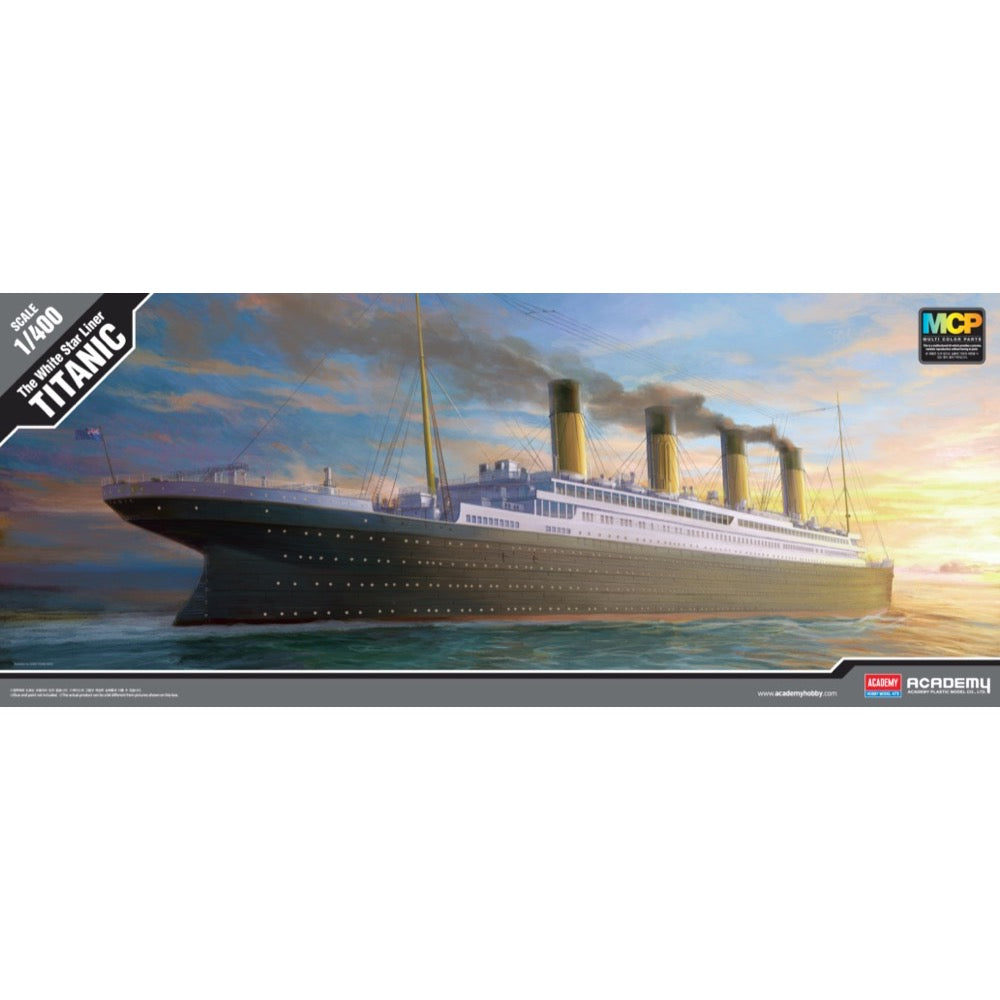
The packaging of the Academy 1:700 Scale R.M.S. Titanic model kit features a captivating image of the Titanic embarking on its journey, effectively conveying the ship's monumental size and grandeur. The box design, which includes multilingual information to cater to a global audience, proudly displays Academy's M.C.P. (Multi-Coloured Plastic) logo, a clear indication of the high-quality components within. This kit, designed for experienced modellers, offers an opportunity to add a historically rich and detailed model to their collection. With its meticulous attention to detail and historical accuracy, this Titanic model kit promises an immersive building experience and a stunning final display piece.
Features
Display stand included
Need to assemble
Actual Kit size: Length 380mm (14.96inch)
Contains one unassembled model kit
Easy to follow pictorial instructions in English.
Paint and cement required to complete model
ACADEMY
Academy 14215 1/400 RMS Tit...
$104.95
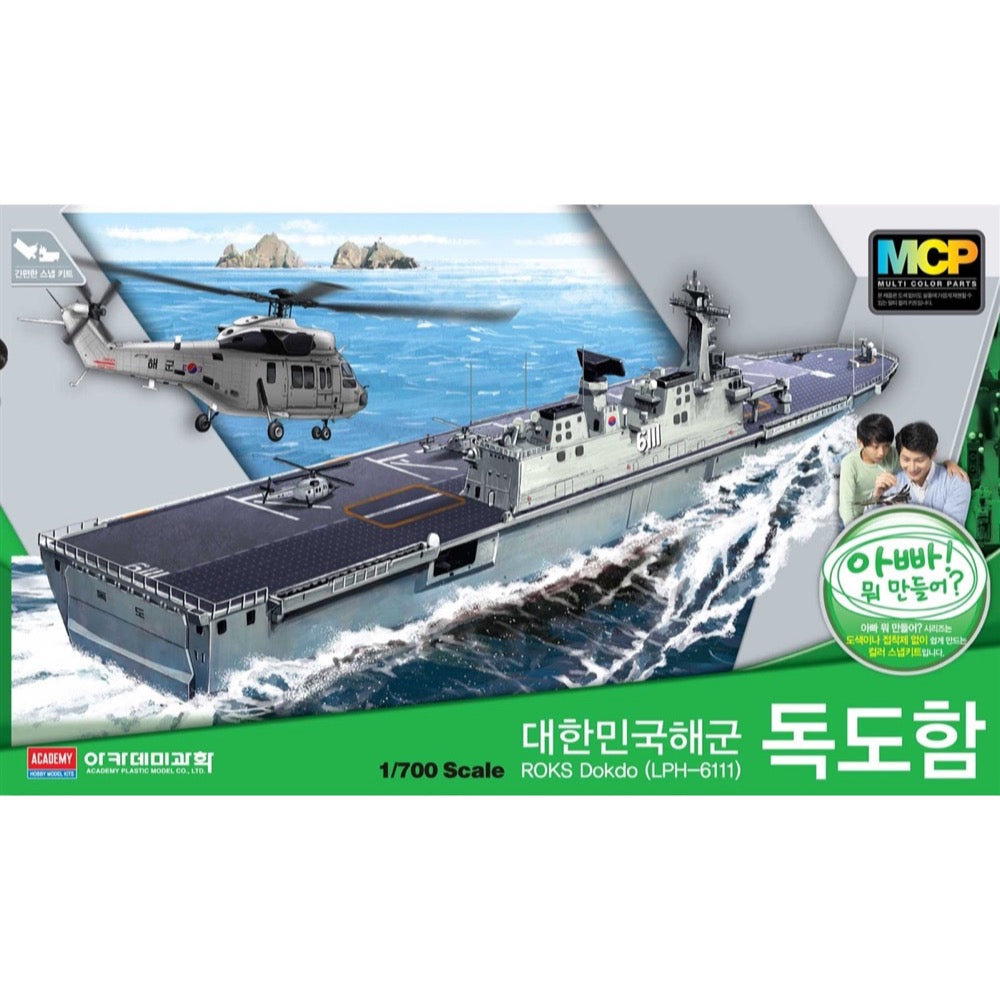
The RMS Titanic is a British ocean liner built for the White Star Line shipping line. The launch took place on May 30, 1911 at the Harland and Wolff shipyard. Hailed as a marvel of marine engineering, the Titanic was considered unsinkable. This legend turned out to be untrue during its maiden voyage, when the liner hit an iceberg in the North Atlantic and sank along with about 1,500 people on the night of April 14-15, 1912. It was one of the most spectacular sea disasters of the 20th century. Technical data: displacement (full): 46300t, length: 269m, width: 29.41m, draft: 10.5m, maximum speed: 24w, crew: 892 people and 1324 passengers.
Academy's detailed full-hull kit of the Titanic in 1/400 scale will measure 67cm long when assembled. Includes display stand with nameplate. Selected by "Modell Fan" as "Model of the Year 1998."
This release features "multicolored parts," so you can get a nice looking model without painting. As the box says, though, it "may be painted for enhanced detail."
This is an injection-plastic ship model kit.
ACADEMY
Academy 14216 1/700 Rok Nav...
$38.95
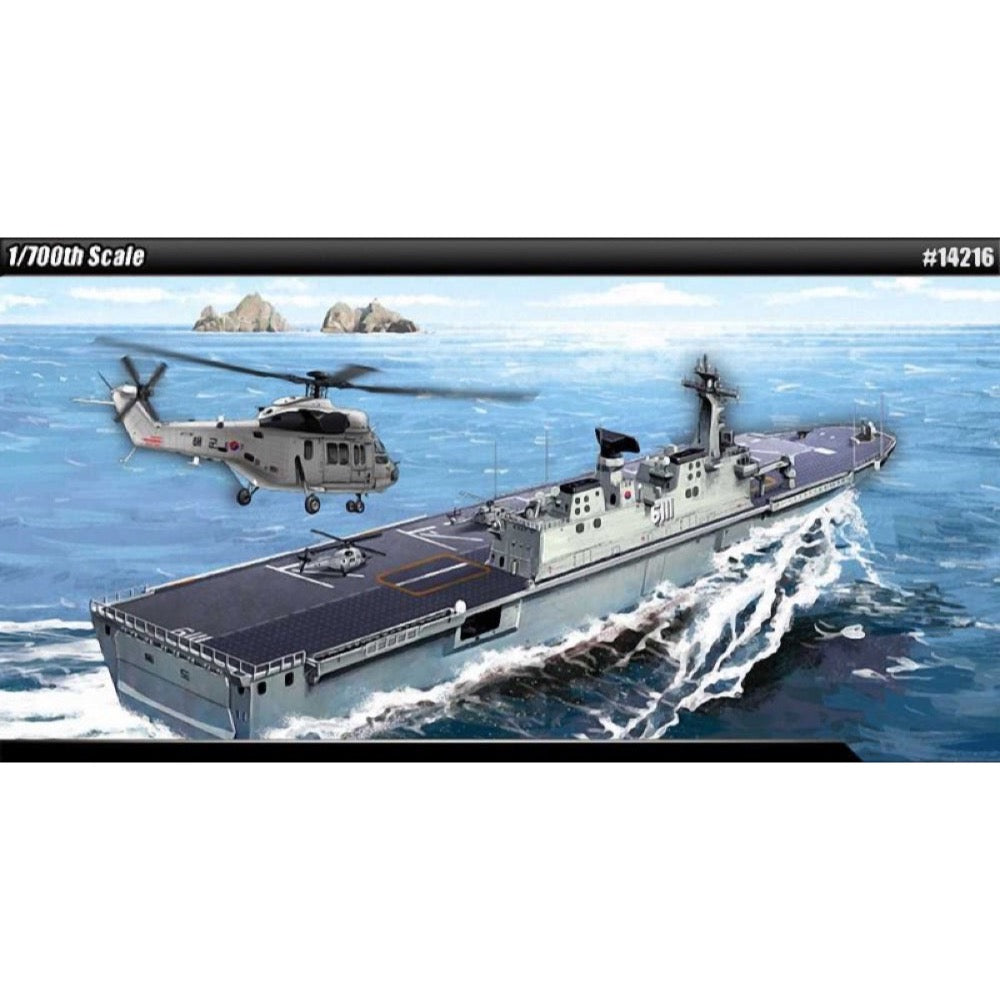
ROK Navy Dokdo is a Korean Amphibious Carrier. It was designed for military operations in which an amphibious landing is conducted with high speed. It can carry multiple helicopters, LCACs, vehicles and marines.
The kit includes, anchor, antenna, and a stand. This is a MCP (Multi Color Part) kit which needs no painting and is a push fit. An excellent kit for a beginner.


ACADEMY
Academy 14217 1/1000 RMS Ti...
$33.95
RMS Titanic is a British ocean liner built for the White Star Line. It was launched on May 30, 1911 at the Harland and Wolff shipyard. Hailed as a marvel of marine engineering, Titanic was considered an unsinkable ship. This legend turned out to be untrue during its maiden voyage, when the liner hit an iceberg in the North Atlantic and sank on the night of April 14-15, 1912, along with about 1,500 people. It was one of the most spectacular maritime disasters of the 20th century. Technical data: displacement (full): 46,300t, length: 269m, width: 29.41m, draft: 10.5m, maximum speed: 24kt, crew: 892 people and 1,324 passengers.
The Academy 1/1000 RMS Titanic MCP from the plastic ship model kits range accurately recreates the real life famous ocean liner. This model requires paint and glue to complete.
This high quality plastic kit is a to scale model that will require assembly and may require additional tools, sold separately.
This is an injection-plastic ship model kit.
Features
MCP (Multi Coloured Parts)
Assemble without paint or glue
Display stand


ACADEMY
Academy 14218 1/800 Battles...
$19.95
Bismarck was a German battleship, the keel of which was laid in 1936 and launched in February 1939. The battleship entered the rope service in the German Navy (German Kriegsmarine) in August 1940. The ship was 251 meters long, 36 meters wide, and had a full displacement of 53,000 tons. Bismarck's top speed was around 29-30 knots. The main armament was 8 380 mm guns in four twin turrets, and the secondary armament included: 12 150 mm guns or 16 105 mm guns.
The Bismarck was the first ship of the type with the same name - the Bismarck. It was ordered to replace in line the old battleship Hannover, completely obsolete in the 1930s. At the time of launch, Bismarck was the largest German ship and the largest European battleship. It had good armor, and its main or secondary armament was inferior to its counterparts on British ships. He made his maiden voyage in September 1940, when he was ferry to Gdynia, which was to be his home port. Bismarck's combat trail during World War II was very short. Bismarck set out on its first combat voyage on May 19, 1941 - it was supposed to perform cruising operations in the Atlantic and attack primarily Allied convoys. In carrying out this plan, Bismarck, with the accompanying heavy cruiser Prinz Eugen, was already crossing the Danish Strait a few days later. On May 24, a battle took place in this strait between the German team and British ships, as a result of which the battlecruiser HMS Hood was sunk and Bismarck itself was badly damaged. After this battle, significant Royal Navy forces - including the Polish destroyer ORP Piorun - were directed against Bismarck, which the German ship tracked down and sent to the bottom on May 27, 1941. It is worth noting that there is a probable hypothesis assuming that the battleship Bismarck was self-sunk by the crew in connection with the damage sustained in combat on May 27, which made it impossible to return to the base on its own.
This high quality plastic kit is a to scale model that will require assembly and may require additional tools, sold separately.

ACADEMY
Academy 14219 1/800 Battles...
$18.95
Tirpitz was the second of two Bismarck-class battleships built for Nazi Germany's Kriegsmarine (navy) during World War II. Named after Grand Admiral Alfred von Tirpitz, the architect of the Kaiserliche Marine (Imperial Navy), the ship was laid down at the Kriegsmarinewerft Wilhelmshaven in November 1936 and her hull was launched two and a half years later.
This kit is an accurate scale reproduction. When completed is 290 mm long and 45 mm wide. It is suitable for Beginner Skill level modeller.
Glue and paint are required but are not included.
Features
ALL NEW TOOLING!
Final version of WWII U.S. Navy Battleship Missouri
Multi-Colored Parts (MCP), no painting needed; fast easy assembly
2 Rotatable gun turrets & 1 fixed gun turret
Reconnaissance aircraft included
Includes water transfer decals & stickers.
Full hull and water line option


ACADEMY
Academy 14220 1/700 R.M.S. ...
$56.95
$64.99
The RMS Titanic was a passenger ship of the British shipping company White Star Line. She was built in Belfast at the Harland & Wolff shipyard and was the largest ship in the world when she entered service on April 2, 1912.As the second of three Olympic-class steamers, like her sister ships she was intended for liner service on the Southampton-Cherbourg-Queenstown-New York, New York-Plymouth-Cherbourg-Southampton route and was to set new standards in travel comfort. On her maiden voyage, the Titanic collided sideways with an iceberg on April 14, 1912 at around 11:40 p.m. approximately 300 nautical miles southeast of Newfoundland and sank two hours and 40 minutes later in the North Atlantic.
The kit features an LED set which adds drama and brings the completed model to life. Deck structures are realistic, the hull is molded in color.The kit comes with display stand and nameplate. Because it's an MCP kit needing no painting, but still filled with fine detail, it can be enjoyed by beginner and experienced modeler alike.
This is an injection-plastic ship model kit.
Includes
Plastic sprue
Decalsheet (waterslide)
Electronics
Features
Internal lighting by LED
MCP Multi Colour Parts
LED unit
Display stand with battery holder
Requires two AAA batteries (not included)
1:700 scale plastic model kit from Academy, can be built with or without paint, requires glue


ACADEMY
Academy 14222 1/700 USS Mis...
$51.95
THE USS Missouri (BB-63), (“Mighty Mo” or “Big Mo”) is a United States Navy Iowa-class battleship and was the third ship of the U.S. Navy to be named in honor of the U.S. state of Missouri. Missouri was the last battleship commissioned by the United States and was best remembered as the site of the surrender of the Empire of Japan which ended World War II. Missouri received a total of 11 battle stars for service in World War II, Korea, and the Persian Gulf, and was finally decommissioned on 31 March 1992. She remained on the Naval Vessel Register until January 1995.
Features
ALL NEW TOOLING!
Final version of WWII U.S. Navy Battleship Missouri
Multi-Colored Parts (MCP), no painting needed; fast easy assembly
2 Rotatable gun turrets & 1 fixed gun turret
Reconnaissance aircraft included
Includes water transfer decals & stickers.
Full hull and water line option


ACADEMY
Academy 14223 1/700 USS Mis...
$65.95
$79.99
USS Missouri (BB-63) was an American battleship laid down in 1941, launched in January 1944, and commissioned in the US Navy in June 1944. The length of the ship was 270.4 m, width 33 m, and her full displacement - at the time of launching - 58,400 tons. The top speed of the USS Missouri battleship was up to 33 knots. The main armament at the time of the launch was 9 406 mm guns in three turrets of three guns each, and the secondary armament was mainly 20 127 mm guns.
The USS Missouri was the third of the six Iowa-class battleships ordered. As it turned out, with the Montana-class battleship building program failing, the Iowa-class battleships were the last to be launched for the US Navy. As they were built without any financial or displacement limits, they also turned out to be the most technologically advanced American battleships in World War II. From the outset, they were built as key carrier ships for aircraft carriers and placed great emphasis on high top speed, which made Iowa-class battleships much faster than any other American battleships. They also had carefully crafted armor and new 406 mm Mk. VII with a greater range of the effective shot. USS Missouri (BB-63) began its participation in World War II in December 1944, by ferrying from Atlantic ports to Hawaii. As early as January 1945, he supported the US Marines on Iwo-Jima with his artillery. In March this year, the USS Missouri acted as a shield ship for a team of aircraft carriers that attacked targets on the Japanese Islands with their on-board planes. In April, he supported activities in the Okinawa region. The battleship completed its operations in World War II in a very glorious and representative manner - it was on board that the representatives of Japan signed the act of unconditional surrender of their country on September 2, 1945. The ship also took an active part in the Korean War (1950-1953). In 1956, however, he was placed in the reserve. In the 1980s, he returned to line service, having previously undergone a thorough modernization. It involved the installation of modern electronics and fire control systems, as well as the installation of Tomahawk and Harpoon rocket launchers and Phalanx anti-aircraft systems. The battleship was also adapted to the homing of on-board helicopters. The ship modernized in this way took an active part in the protection of tankers in the Persian Gulf region in 1987, in the final phase of the Iran-Iraq war. He returned to these waters in 1990 to take an active part in Operation Desert Storm (1990-1991) firing rockets and on-board artillery at targets in Iraq. Finally, in 1992, the ship was decommissioned. At present, it serves as a museum ship in Hawaii.
Features
Snap-together assembly (I used glue in my quick build)
Optional waterline display
Optional display stand for full-hull display
Lots of anti-aircraft batteries provided
Nicely detailed superstructure
Two SC-1 Seahawks and two catapults provided
Large sheet of yellow-tape masks for the decks, AAA gun wells, and upper surfaces of the main and 5 inch gun turrets
Set of photo-etched parts which provide railings, radar antennas, and other details


ACADEMY
Academy 14224 1/700 USS Ent...
$69.95
$79.99
The USS Enterprise (CV-6) was an American aircraft carrier, the keel of which was laid in 1934, launched in October 1936, and commissioned with the US Navy in May 1938. The ship was 252 m long, 33.4 m wide, and her full displacement at the time of launching was 25,500 tons. The maximum speed of the USS Enterprise was around 32-33 knots, and its main armament consisted of 90 on-board planes.
The USS Enterprise was the second Yorktown-class aircraft carrier. The experience gained during the operation of Lexington-type vessels was used in the construction of this type of ship. First of all, it was decided to build relatively large aircraft carriers, with the greatest emphasis on the number of planes taken and the maximum speed, at the expense of armor. So they were going in the same direction as the Japanese designers, and in the opposite direction to the British Royal Navy. It is worth adding that the construction of the aircraft carrier popularly known as "Big E" was part of the program of rebuilding the American economy after the Great Depression of 1929, launched by President Franklin D. Roosevelt. During its long and well-deserved service, the USS Enterprise was modernized several times: in 1940 it received an air surveillance radar (type CXAM-1), and later in 1942 it received a new SC-2 radar. In the course of the fighting in the Pacific, the anti-aircraft weapons were also changed, which in October 1943 had 40 40 mm cannons and 50 20 mm cannons. At the outbreak of World War II in the Pacific, the USS Enterprise was near Pearl Harbor and, shortly after the Japanese attack, took part in a fruitless search for its attackers. In April 1942, the carrier covered the famous Doolittle Raid in Tokyo. Following this operation, he played one of the most important roles in the Battle of Midway in June 1942. Later in 1942, the USS Enterprise was intensively involved in naval operations in the Guadalcanal area, for example in the Battle of Santa Cruz Island. In November 1943 he covered the American landings on Tarawa and Makin. In early 1944 he took part in the fighting in the Marshall Islands area, and in June of that year he took part in the Battle of the Philippine Sea. In 1945, it supported the American operations on Iwo-Jima and Okinawa, being damaged in their course. It was taken off the line and scrapped in 1960. The USS Enterprise was one of the most distinguished and decorated ships of the US Navy during World War II.
Detailed plastic model kit including detailed instructions, decals and in some cases other accessories (etchings, resin and others). Paints and glue are not part of the product and must be purchased separately.
This is an injection-plastic ship model kit.